

For decades, the printing industry has thrived on predictability. A printer receives an order, sources paper and consumables, schedules production, and delivers on time. It is a process built on precision, planning, and reliability.
Today, however, certainty has become a luxury.
Across Nigeria, printing businesses are navigating a difficult reality where the availability and cost of paper, ink, plates, chemicals, spare parts, and machinery can change almost overnight. What was once a straightforward supply chain has become a complex web of delays, rising costs, foreign exchange pressures, and global disruptions. For many printers, the challenge is no longer simply winning jobs—it is finding a way to deliver them profitably.
From commercial printers in Lagos and Abuja to packaging producers in Ogun and manufacturers in the South-East, the ripple effects of global supply chain shocks are being felt across every segment of the industry.
When Global Problems Become Local Challenges
The Nigerian printing industry is deeply connected to international markets. Most of the paper, printing plates, inks, press components, and finishing equipment used in the country are imported.
This dependence means that when disruptions occur thousands of kilometers away, Nigerian printers feel the impact almost immediately.
A shipping crisis in Asia, a conflict affecting major trade routes, production cuts at paper mills in Europe, or rising fuel costs across international markets can all translate into higher costs and delayed deliveries for local print businesses.
The situation becomes even more challenging when combined with Nigeria’s foreign exchange volatility. A printer may prepare a quotation for a customer today only to discover that the cost of raw materials has increased significantly by the time the order is confirmed.
The result is a business environment where planning has become increasingly difficult and profit margins continue to shrink.
The Paper Problem
Perhaps no challenge illustrates the situation better than paper.
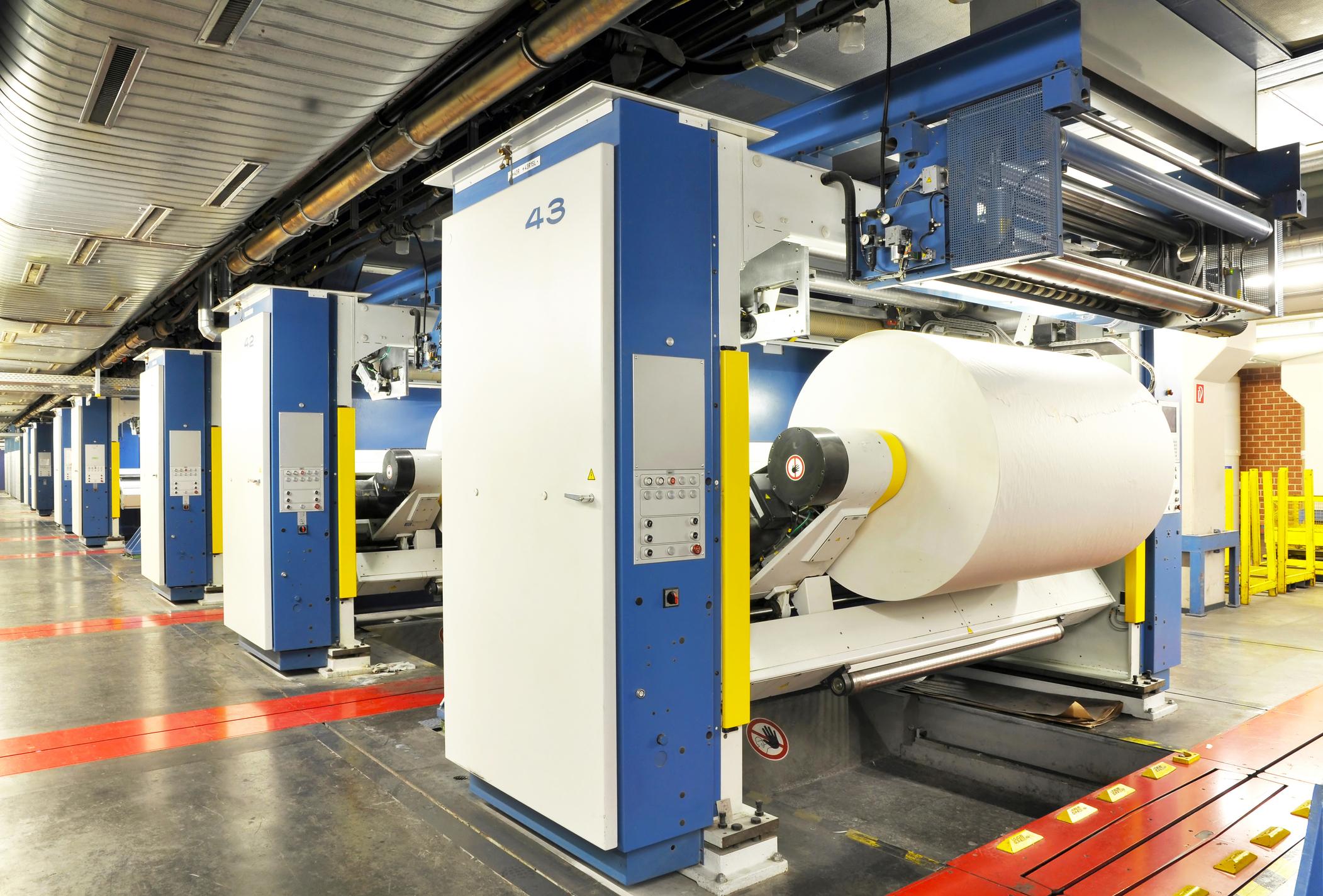
Paper remains the lifeblood of the printing industry, yet it has become one of its biggest sources of uncertainty. Global shortages, increased production costs, transportation disruptions, and fluctuating exchange rates have all contributed to sharp price increases over recent years.
For many Nigerian printers, the days of maintaining stable paper inventories are gone. Some companies now purchase smaller quantities more frequently, while others struggle to secure specific grades and sizes required for customer projects.
This uncertainty affects everyone.
Publishers face higher production costs for books and educational materials. Packaging manufacturers see their margins squeezed. Commercial printers handling brochures, annual reports, and marketing materials must constantly revise quotations to reflect changing market realities.
What was once a routine purchasing decision has become a strategic business concern.
Ink, Plates and Everything In Between
Paper is only part of the story.
Inks, printing plates, blankets, adhesives, chemicals, and machine spare parts have also become more expensive and, in some cases, harder to obtain.
Many printers report waiting longer for critical components needed to keep presses running efficiently. A simple spare part delay can disrupt production schedules, frustrate customers, and increase operational costs.
The challenge is particularly severe for businesses operating older equipment. Finding replacement parts for ageing machines can take weeks or even months, especially when international suppliers face their own logistical challenges.
For an industry where deadlines are everything, such delays can be costly.
Customers Want Stability in an Unstable Market
Ironically, customers often expect the same pricing and delivery timelines they enjoyed years ago.
Many clients do not fully understand the scale of the challenges facing the industry. They see the final printed product but rarely see the complexities behind sourcing materials, managing foreign exchange risks, or navigating shipping delays.
As a result, printers are frequently caught between rising costs and customer resistance to price increases.
This pressure has intensified competition across the industry. Some businesses respond by lowering prices to retain customers, often sacrificing profitability in the process. Others absorb costs temporarily, hoping market conditions will improve.
Neither approach is sustainable in the long term.
The reality is that supply chain disruptions have fundamentally changed the economics of printing.
Building Resilience in Uncertain Times
Despite the challenges, many Nigerian printers are demonstrating remarkable resilience.
Forward-thinking companies are diversifying their supplier networks rather than relying on a single source. Others are investing in inventory management systems that provide better visibility into stock levels and purchasing requirements.
Some businesses are strengthening relationships with customers through transparent communication, helping clients understand why prices fluctuate and why early planning has become more important than ever.
There is also growing interest in local alternatives. While Nigeria may not yet produce all the materials required by the industry, opportunities exist to strengthen local manufacturing capacity, encourage investment in paper production, and develop more robust domestic supply networks.
Such initiatives could reduce dependence on imports and improve the industry’s ability to withstand future global disruptions.
Turning Crisis into Opportunity
Every challenge carries the seeds of transformation.
The supply chain shocks affecting the global economy have exposed vulnerabilities within the Nigerian printing industry, but they have also highlighted areas where innovation and strategic thinking can create new opportunities.
Businesses that embrace smarter procurement practices, invest in technology, strengthen supplier relationships, and focus on operational efficiency will be better positioned to succeed in the years ahead.
The future may be uncertain, but uncertainty does not have to mean decline.
Nigeria’s printers have weathered economic recessions, technological disruption, currency fluctuations, and energy crises. The current supply chain challenges represent another test of the industry’s adaptability and resilience.
Paper, ink, and printing materials may travel across oceans before reaching Nigerian presses, but the determination and ingenuity that keep those presses running are proudly local.
And in a world increasingly defined by uncertainty, that may prove to be the industry’s greatest competitive advantage.