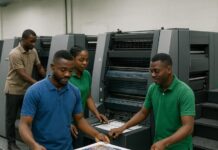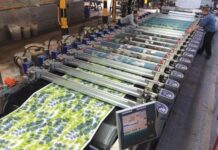


As Nigeria inches closer to the 2027 general elections, a familiar rhythm is returning—one that echoes not from campaign podiums, but from the deep hum of printing presses across the country. From Lagos to Kano, Abuja to Port Harcourt, the signs are already unmistakable: Nigeria’s print industry is quietly entering one of its most lucrative—and demanding—cycles.
Even before the official campaign window, political posters and billboards have begun appearing nationwide, raising concerns about premature campaigning. By mid-2026, party primaries are expected to intensify, followed by full-scale campaigns later in the year, ahead of elections slated for early 2027. For printers, this timeline is more than political—it is economic, strategic, and transformative.
Welcome to Print Wars 2027.
The Early Surge: Demand Before the Deadline
Traditionally, election printing peaks during official campaign periods. But the 2027 cycle is breaking that pattern. The emergence of early campaign materials—despite regulatory warnings—has triggered pre-season demand, giving print businesses a head start.
Across major cities, large-format printers are already handling:
• Campaign posters and banners
• Branded souvenirs (caps, T-shirts, flyers)
• Billboards and outdoor signage
The implication is clear: printers are no longer waiting for INEC’s whistle—they are preparing ahead of it.
This early momentum is reshaping production cycles. Instead of a short, intense burst of activity, printers are now planning for a longer, staggered election economy, stretching from late 2025 into 2027.
Scaling Up: Capacity is the New Currency
In election seasons, volume is everything—and printers know it. The difference between winning and losing major political contracts often comes down to speed, consistency, and capacity.
Across Nigeria, forward-thinking print houses are making bold moves:
• Investing in high-speed digital and large-format machines
• Expanding production floors and workforce
• Partnering with logistics providers for nationwide distribution
The stakes are high. A single gubernatorial or presidential contract can mean millions of impressions within days, often under tight deadlines.
Yet, scaling up is not without risk. Rising diesel costs, forex volatility, and the high price of imported consumables continue to squeeze margins. For many printers, the election boom is a high-reward, high-pressure gamble.
The Competition Curve: Bigger Players vs Agile Printers
The 2027 print race is not just about volume—it is about positioning.
Large, established print firms are leveraging:
• Existing political relationships
• Advanced machinery
• Nationwide reach
Meanwhile, smaller and mid-sized printers are carving out their own space through:
• Faster turnaround times
• Competitive pricing
• Hyper-local campaign support
Interestingly, political campaigns are increasingly decentralized. Candidates now require localized printing in constituencies, creating opportunities for regional print businesses to thrive.
This shift is leveling the playing field. In the Print Wars of 2027, agility may rival size.
Technology Takes Center Stage
Election printing is no longer just ink on paper—it is becoming smarter.
Printers are adopting:
• Variable data printing for personalized campaign materials
• Digital workflow automation to reduce errors and speed up output
• Color management systems to ensure brand consistency across thousands of prints
These innovations are critical in an era where political branding must remain consistent across every medium—from roadside banners to handheld flyers.
More importantly, technology is enabling printers to meet one of the biggest demands of modern campaigns: speed without compromise.
Regulation, Responsibility, and Risk
While demand is rising, so is scrutiny.
Nigeria’s media regulators have already begun tightening rules ahead of the elections, particularly around political content and misinformation. Although these regulations are focused on broadcast media, the ripple effects extend to print.
Printers now face important questions:
• Should they vet political content before production?
• How do they avoid printing inflammatory or non-compliant materials?
• What are the reputational risks of controversial contracts?
In previous election cycles, print shops operated largely as neutral service providers. Today, that neutrality is being tested. Printers must balance commercial opportunity with ethical responsibility.
The Economics of Election Printing
For many print businesses, election seasons are a financial lifeline.
After years of grappling with:
• Rising operational costs
• Declining traditional print demand
• Digital disruption
…the political campaign cycle offers a rare window of high-volume, cash-driven business.
However, profitability is not guaranteed.
Challenges include:
• Last-minute order changes
• Payment delays from political clients
• Fluctuating material costs
Printers who succeed will be those who combine financial discipline with operational efficiency—managing cash flow as carefully as they manage print runs.
Beyond 2027: A Defining Moment for the Industry
While the immediate focus is on 2027, the implications go far beyond the elections.
This period is forcing Nigerian printers to:
• Modernize their operations
• Invest in new technologies
• Build stronger client networks
• Develop scalable business models
In essence, the election boom is acting as a stress test—and a springboard.
Those who adapt will emerge stronger, more competitive, and better positioned for the future of print in Nigeria.
Conclusion: Ink, Influence, and Opportunity
The road to 2027 is not just a political journey—it is an industrial one.
Behind every campaign slogan, every smiling billboard, and every flyer handed out at a rally lies the unseen work of Nigeria’s printers. They are the silent force powering visibility, messaging, and voter engagement.
But this is more than business.
It is a moment where ink meets influence, where machines meet momentum, and where an entire industry finds itself at the center of a national conversation.
As the countdown to 2027 continues, one thing is certain:
The presses are rolling—and the Print Wars have already begun.