

Every election season in Nigeria tells a story.
It is a story of candidates seeking votes, political parties competing for power, and millions of citizens exercising their democratic rights. Across cities, towns, and villages, campaign messages appear on posters, banners, flyers, billboards, vehicle wraps, branded souvenirs, voter education materials, and countless other printed products.
But beyond the politics lies another story, one that receives far less attention.
It is the story of an industry that helps bring democracy to life.
The Nigerian printing industry.
As the nation gradually moves toward another election cycle, an important question deserves serious consideration: If elections are designed to strengthen Nigeria’s democracy, shouldn’t election-related printing also strengthen Nigeria’s economy?
In other words, should election materials be made in Nigeria, printed in Nigeria, and used to create opportunities for Nigerian businesses and workers?
For many industry stakeholders, the answer is an emphatic yes.
More Than Ink on Paper
At first glance, election printing may seem straightforward.
Print the posters. Produce the banners. Deliver the campaign materials.
Job done.
However, election-related printing represents far more than a collection of production orders.
It is a powerful economic engine.
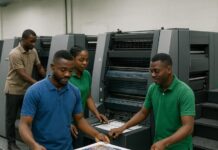
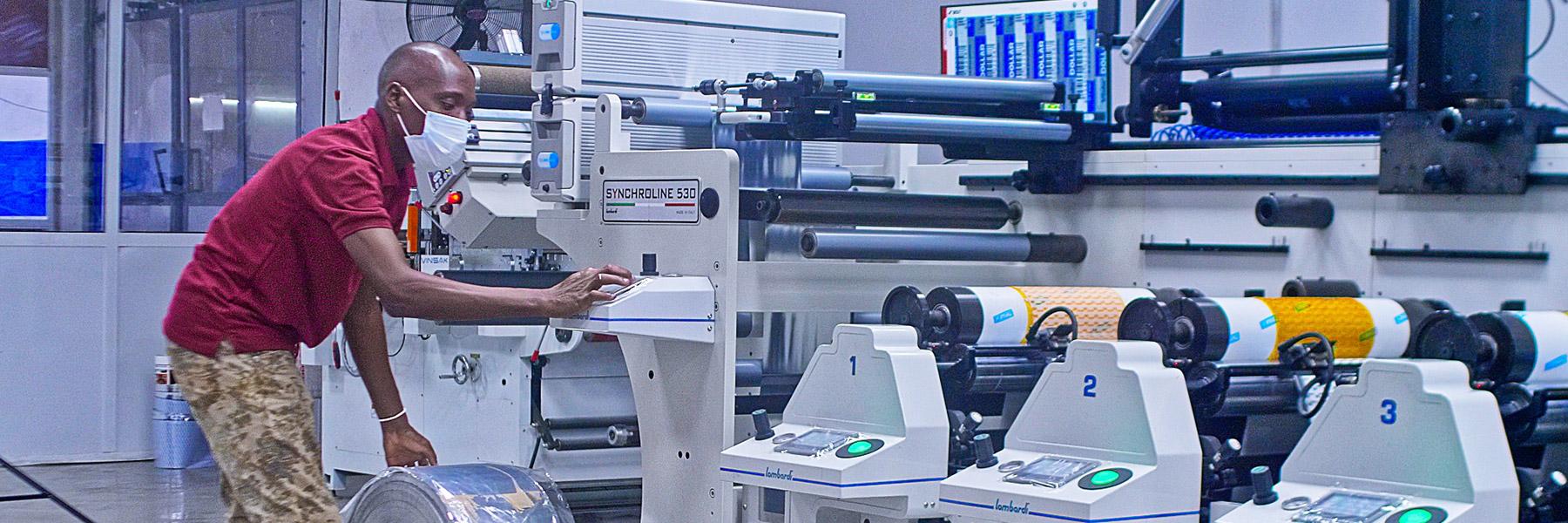
Every major printing contract supports an entire value chain. Graphic designers create artwork. Machine operators handle production. Finishing specialists complete the jobs. Logistics providers move materials across the country. Equipment technicians maintain machinery. Suppliers provide consumables and raw materials.
Behind every printed campaign poster are real people earning incomes, supporting families, and contributing to economic growth.
When election printing is awarded to local companies, the benefits remain within the Nigerian economy.
Jobs are created.
Skills are developed.
Businesses expand.
Investments increase.
The ripple effect can be enormous.
An Opportunity Too Important to Miss
Election years often generate some of the largest printing demands in the country.
Political parties require campaign materials in massive volumes. Civic organizations produce voter education resources. Government agencies engage in public awareness campaigns. Media organizations increase promotional activities. Event planners, advertisers, and branding companies all experience heightened demand.
For the printing industry, it is one of the most commercially significant periods in the business cycle.
Yet many operators argue that the full economic potential of these opportunities is not always maximized.
At a time when Nigerian businesses face rising operational costs, foreign exchange pressures, and increasing competition, election-related spending presents a unique opportunity to stimulate local production.
Every contract awarded locally represents an investment in domestic capacity.
Every machine kept running contributes to economic activity.
Every successful project helps strengthen the industry’s long-term sustainability.
The question is no longer whether Nigerian printers have the capability.
The industry has repeatedly demonstrated that it does.
The real challenge is ensuring that local capacity is fully recognized, utilized, and supported.
Building Confidence in Local Capacity
For decades, Nigerian printers have evolved significantly.
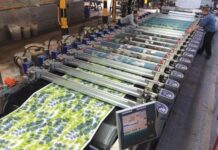
Across the country, businesses have invested in modern equipment, digital technologies, large-format production systems, packaging solutions, finishing capabilities, and workflow automation.
Many printing companies now operate facilities capable of delivering world-class quality across a broad range of applications.
From commercial printing and packaging to security printing and branding solutions, Nigerian printers continue to prove that they can meet demanding production standards.
What the industry increasingly seeks is confidence.
Confidence from policymakers.
Confidence from institutions.
Confidence from stakeholders responsible for procurement decisions.
When local companies are trusted with major projects, they gain valuable experience, strengthen operational capacity, and become more competitive.
In many ways, local participation is not simply about supporting existing businesses; it is about building future industrial capability.
Elections as a Catalyst for Industrial Growth
Countries that successfully develop strong manufacturing sectors often use strategic procurement to stimulate domestic industries.
The principle is simple.
When significant spending occurs, local participation should be encouraged wherever practical and feasible.
Election-related printing offers a similar opportunity.
Instead of viewing elections solely as political events, they can also be viewed as opportunities to strengthen productive sectors of the economy.
Imagine the impact if a larger share of election printing contracts consistently translated into investments in equipment upgrades, workforce development, technology adoption, and operational expansion across the Nigerian print sector.
The benefits would extend far beyond election periods.
The industry would emerge stronger, more competitive, and better positioned to serve other sectors throughout the year.
Strengthening Democracy Through Industry
There is also a symbolic dimension to this conversation.
Democracy is ultimately about participation.
It is about ensuring that citizens, communities, and institutions contribute to the nation’s development.
In many ways, involving local industries more deeply in election-related activities reflects that same principle.
When election materials are designed, produced, and delivered by Nigerian companies, the democratic process becomes more connected to local economic development.
The election not only generates political outcomes.
It generates industrial opportunities.
It supports entrepreneurship.
It creates employment.
It strengthens technical expertise.
And it contributes to national growth.
Looking Beyond 2027
As preparations for future elections continue, the Nigerian printing industry stands at an important crossroads.
The sector faces undeniable challenges, power shortages, high production costs, foreign exchange volatility, and increasing technological demands.
Yet it also possesses remarkable potential.
Election-related printing can become more than a seasonal business opportunity.
It can become a catalyst for industry transformation.
It can encourage investment.
It can accelerate modernization.
It can help develop the next generation of print professionals.
Most importantly, it can demonstrate that Nigerian businesses are capable of delivering solutions that meet national needs.
The phrase “Made in Nigeria” has become a powerful call for economic self-reliance and industrial growth.
Perhaps it is time to extend that vision further.
Perhaps the next election should not only be made in Nigeria.
It should also be printed in Nigeria.
Because every ballot guide, every campaign poster, every voter education leaflet, and every election-related print product represents more than a communication tool.
It represents an opportunity to strengthen an industry that has quietly supported Nigeria’s development for decades.
And when democracy invests in local industry, everyone stands to benefit.