

Sustainability is no longer just about planting trees, collecting waste, or putting a “green” label on a product. For Nigeria’s printing and packaging industry, the bigger question is becoming much more practical: can doing the right thing for the environment also make good business sense?
In Lagos, the answer to that question can sometimes begin with something as ordinary as a carton, a paper offcut or an empty plastic bottle.
Walk into a typical Nigerian print shop, and you will see the evidence of waste everywhere. Trimmed paper sits beside the guillotine. Rejected prints wait in corners. Cardboard cores pile up. Packaging materials are thrown aside after production. Used plates, ink containers, and other consumables may have nowhere organized to go.
The easy reaction is to call all of this waste.
But what if some of it is actually money waiting for a second business model?
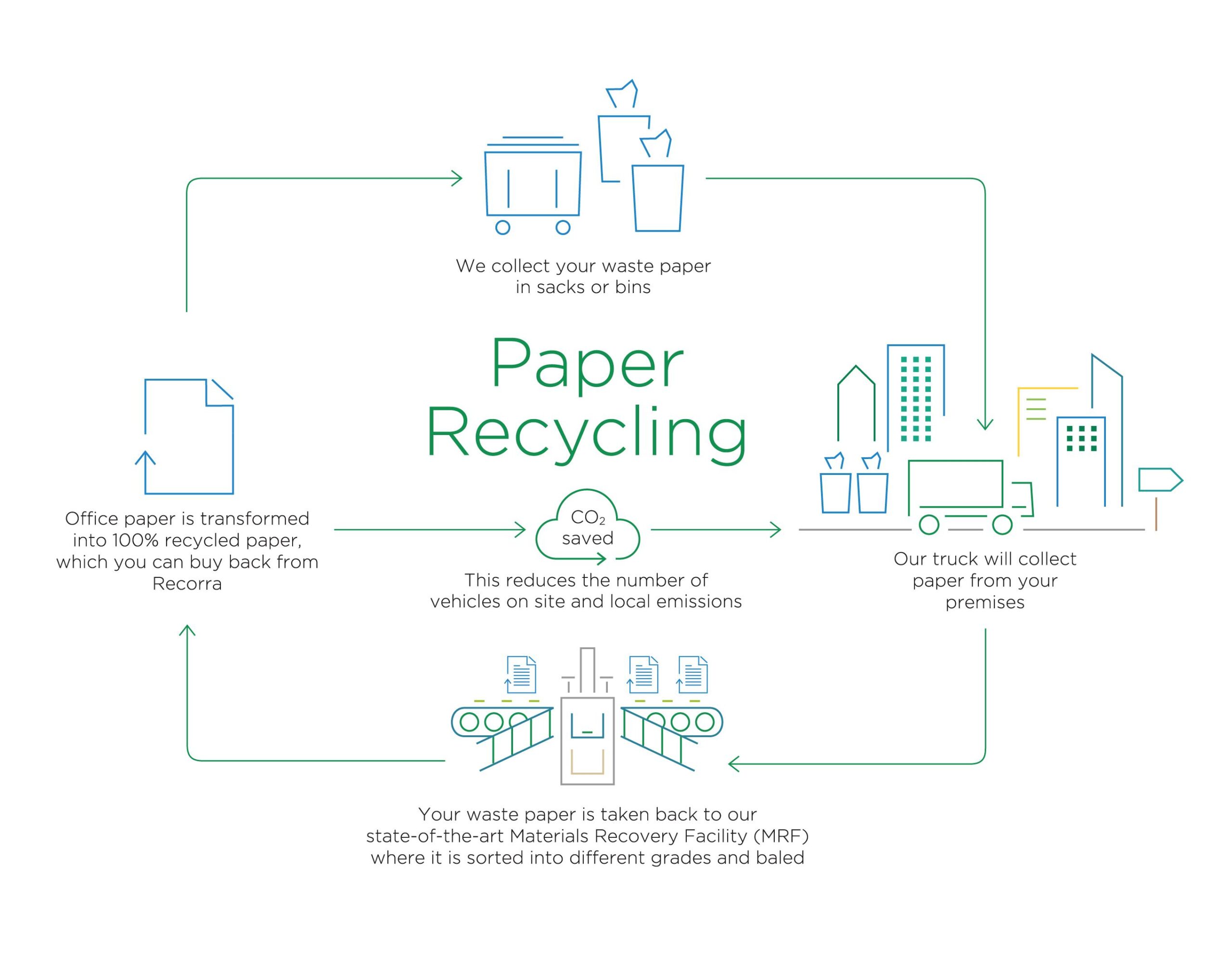
That is the thinking behind circularity, the idea that materials should remain useful for as long as possible rather than following the traditional “produce, use and throw away” model. Around the world, businesses are increasingly discovering that circularity works best when it is not treated as an expensive environmental project sitting on the side of the business, but as part of the commercial engine itself, and that lesson is particularly relevant to Nigeria.
The Nigerian Printer’s “Waste” Problem
For many printers, sustainability can sound like another demand for investment at a time when businesses are already struggling with electricity costs, diesel, paper prices, foreign exchange and customer pressure to keep prices low.
The natural question is: “Where is the money for sustainability?”
But perhaps the better question is: “Where is the money we are currently throwing away?”
Consider a printer producing thousands of flyers, cartons or labels. There will inevitably be paper offcuts. Some will be unavoidable. Some may be reusable. Some can be separated and sold to recycling companies. Others could potentially become inputs for new products.
The same applies to packaging companies.
A carton manufacturer can ask whether production waste can be recovered. A commercial printer can examine whether rejected jobs are properly tracked. A publisher can reduce unnecessary print runs through better forecasting. A packaging converter can investigate whether recovered materials can support new product lines.
None of these ideas is particularly glamorous, but that is precisely the point.
Circularity does not have to begin with an expensive machine or a grand sustainability campaign. It can begin with better questions.
From “Green Project” to Business Project
One of the strongest lessons from Harri Lockett’s experience at Selfridges is the importance of commercial discipline.
Selfridges has built its circular business over several years, testing ideas, measuring performance and walking away from initiatives that do not work. Its Reselfridges proposition includes pre-loved luxury products, repairs, buy-back schemes and beauty recycling.
The important lesson for Nigerian businesses is not that a Nigerian printer should copy a luxury department store; it is that circularity must have a business model.
A recycling programme that costs money every month without delivering measurable value will eventually become difficult to defend. But a waste-recovery programme that reduces disposal costs, creates a new revenue stream, improves production efficiency or attracts customers has a much stronger commercial argument.
This is where Nigerian printers need to change the conversation.
Instead of saying, “We need to become sustainable because sustainability is important,” the business case could be:
“How much are we spending on waste?”
“How much material are we losing during production?”
“Can we sell, reuse or recover some of it?”
“Can we win new customers because of what we are doing?”
“Can we reduce the amount of raw material we buy?”
Those questions turn sustainability from a presentation into a business discussion.
What Happens to the Paper After the Job?
There is an opportunity sitting right inside the average Nigerian print factory: waste mapping.
A printer could track what happens to every major material entering the business: paper, board, film, ink, packaging materials, and other consumables.
- How much comes in?
- How much becomes finished product?
- How much becomes offcut?
- How much is rejected?
- How much is reused?
- How much leaves the factory as waste?
The answers could be surprisingly revealing.
A company that discovers that a significant amount of material is being lost during cutting, setup, or production has found a potential efficiency problem. Reducing that loss can be more commercially valuable than simply buying more raw materials.
In other words, the first circular machine in a printing business may not be a recycling machine. It may be a calculator.
Make Sustainability Invisible
There is another powerful lesson from Selfridges: sustainability does not always have to shout.
The retailer’s circular offering is deliberately integrated into its mainstream luxury environment rather than being presented as a compromise. Customers are encouraged to participate because the experience is attractive, convenient and trusted, not because they are being lectured about environmental responsibility.
Nigeria’s print industry can learn from this.
A customer buying packaging does not necessarily want a long lecture about sustainability. They want packaging that looks good, performs properly, arrives on time and makes commercial sense.
So, the printer’s job is to make the sustainable option easy, credible and commercially attractive.
Imagine a packaging company telling a food manufacturer:
“We can help you reduce material waste, improve your packaging efficiency and introduce recyclable options without compromising the appearance of your product.”
That is a much stronger sales conversation than simply saying, “We are environmentally friendly.”
Trust Will Become a Competitive Advantage
There is also a major issue Nigeria cannot afford to ignore: green claims must be believable.
As sustainability becomes more fashionable, there is a danger that companies will describe almost anything as “eco-friendly,” “green,” “recyclable” or “sustainable” without sufficient evidence. Customers, regulators and corporate buyers will increasingly demand proof.
This is where data becomes important; printers need to know what materials they are using, where those materials come from, what percentage is recycled, how waste is handled, and what claims can actually be supported.
For the Nigerian print and packaging industry, proper documentation could eventually become a competitive advantage.
The printer who can confidently show a client where materials came from, how much waste was recovered, and what sustainability standards were followed may have an advantage over the printer simply putting a green leaf on a brochure.
Start Small. Think Long-Term.
Perhaps the most important lesson is patience.
Circularity is not a magic switch that a business turns on today and monetizes tomorrow.
The experience of Selfridges demonstrates that circular businesses can take years of testing, investment and adjustment before their commercial value becomes obvious.
That is especially relevant in Nigeria, where businesses often operate under intense pressure to see immediate returns.
A printing company does not have to transform its entire operation overnight.
- It could begin by separating paper waste.
- Then measure it.
- Then negotiate with recycling partners.
- Then reduce avoidable production waste.
- Then explore recycled-content products.
- Then develop sustainable packaging solutions.
- Then communicate those capabilities to customers.
- Step by step, the business begins to change.
The Question Nigerian Printers Should Be Asking
The future of sustainability in Nigeria’s printing industry will not be decided by who has the biggest environmental campaign.
It will be decided by who can make circularity practical, measurable and profitable.
The industry already has materials moving through its factories every day. Paper, board, ink, packaging and other resources enter, are transformed and leave.
The opportunity is to stop looking only at the finished product and start looking at the entire journey.
- What comes in?
- What gets used?
- What gets lost?
- What gets reused?
- What gets sold?
- What comes back?
And ultimately, what can be turned into value again?
That is the real promise of circularity.
For Nigerian printers, sustainability should not be another box to tick because the rest of the world is demanding it. It should become another way to control costs, create products, attract customers and build stronger businesses.
Because the most powerful sustainability strategy may not be the one that looks the greenest.
It may simply be the one that makes the most business sense, and keeps making sense five years from now.
The question is no longer “Is sustainability interesting?” The question for every Nigerian printer should be: “Is it actionable, and can we make it pay?”