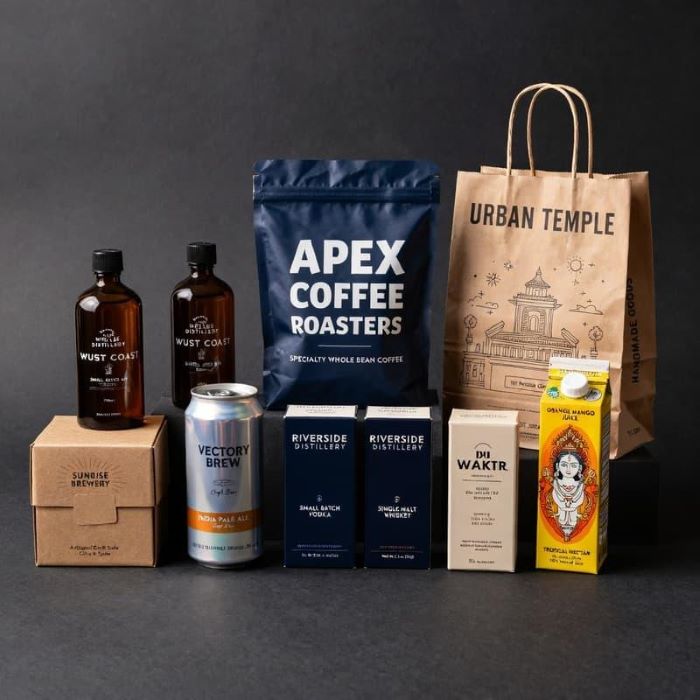


Walk into any supermarket, bar, or liquor store and place two bottles of spirits side by side. Before a customer tastes either one, something else has already happened: the packaging has started selling the product.
For many consumers, the first attraction may not be the liquid inside the bottle but the shape of the pack, the colors, the finishing, the feel, and even the experience of opening it. In a competitive market, packaging is often the first conversation a brand has with the customer.
For Nigerian printers and packaging converters, this presents an interesting opportunity. As brands compete for attention on crowded shelves, premium packaging is becoming less about simply making a pack bigger, heavier, or more decorated. It is increasingly about designing intelligently, using materials efficiently and creating a premium experience without unnecessary waste.
Sustainability Is Changing the Brief
Packaging decisions that were once driven mainly by creativity and appearance are now being influenced by sustainability considerations.
Questions around pack weight, the amount of unused space, material combinations, and what happens to packaging after use are becoming increasingly important. Extended Producer Responsibility (EPR) requirements and other sustainability pressures are also making brands look more closely at the cost and environmental impact of their packaging choices.
For years, heavier packaging was often associated with quality and luxury. A thick carton, elaborate insert, or multiple layers of material could make a product feel more expensive.
But that thinking is changing.
Today, more material does not necessarily mean more value. Brands are increasingly looking for ways to achieve the same premium appearance and feel while using materials more efficiently.
This creates an important opportunity for printers and packaging manufacturers: helping brands achieve premium results without unnecessary material use.
Moving Beyond the Ordinary Carton
Walk through the shelves of many retail outlets, and you will notice a familiar pattern. Premium spirits often come in rectangular cartons differentiated mainly by color, paper, printing, and finishing.
There is nothing wrong with the traditional carton, but brands looking to stand out have an opportunity to go further.
A distinctive shape, curved or angled panels, an unusual opening mechanism or a carefully designed reveal can transform packaging from a simple protective covering into part of the product experience.
This is where structural packaging design becomes important.
Instead of asking, “How much more can we add to this pack?”, designers and converters can begin asking, “How can we make this pack more distinctive with less?”
That shift can lead to packaging that is not only more efficient but also more memorable.
Material Innovation Is Opening New Possibilities
Achieving a premium appearance with less material requires more than good graphic design. It requires knowledge of materials and how they behave during production.
For example, METPET lamination can provide a metallic appearance while offering an alternative to some traditional foil-based approaches. Board-to-board lamination can also be used to combine different board grades, creating rigidity and a substantial feel without necessarily relying on a much heavier structure.
For Nigerian packaging printers, the lesson is clear: material knowledge is becoming as important as printing knowledge.
Understanding how different boards, laminations, coatings, and substrates perform can help printers contribute to packaging projects much earlier in the design process.
Don’t Forget What’s Inside the Pack
The outside of the package may attract the customer, but the inside can determine how memorable the experience becomes.
A well-designed insert can keep a bottle firmly in place while also controlling how the customer discovers the product. This becomes particularly important for limited-edition spirits, premium gift packs, corporate gifts and special releases.
Think about the experience of opening a premium bottle. The customer lifts the lid, sees the first layer, removes the insert, and finally reveals the bottle. That sequence is not accidental.
The unboxing experience itself can become part of the brand.
But there is another consideration that cannot be ignored: protection.
Spirits bottles are heavy and, in many cases, fragile. Packaging must withstand transportation, handling, storage, and distribution before it reaches the consumer. For Nigerian brands dealing with long supply chains and movement between different parts of the country, structural strength is not simply a technical requirement—it is a business necessity.
Strong Doesn’t Have to Look Basic
One interesting solution is litho-laminated micro flute.
It combines the cushioning and strength associated with corrugated materials with a high-quality printed surface suitable for premium packaging.
This gives brands another route to creating protective, fiber-based packaging without making the final product look like a compromise.
For converters, technologies like this demonstrate why the future of packaging will require a closer relationship between design, printing, converting and engineering.
The printer is no longer simply the person putting ink on board. Increasingly, the printer can become part of the process of solving the packaging problem.
Finishing: Less Can Sometimes Say More
Then comes the finishing stage, the point where an already well-designed package can really come alive.
Hot stamping, cold transfer, embossing, debossing, varnishes, and tactile effects can all add visual and physical appeal.
But premium packaging is not necessarily about using every finishing technique available.
In fact, restraint can be more powerful than excess.
A carefully positioned metallic detail, a subtle embossed logo, or a combination of matte and gloss can create a stronger impression than covering the entire package with decorative effects.
For printers, this means finishing should not simply be treated as an opportunity to add more effects. Every technique should serve a purpose and contribute to the identity of the brand.
The question should be: What does this finishing technique add to the customer’s experience?
Designing Luxury from the Beginning
The biggest lesson for brands and packaging professionals is that structure, material, and finishing should not be considered at the last stage of production.
They should be part of the conversation from the beginning.
When designers, printers, converters and brand owners work together early, they can develop packaging that balances four important demands: appearance, protection, manufacturability and sustainability.
For the Nigerian print and packaging industry, this represents a growing opportunity.
As brands compete for attention and consumers become more conscious of packaging waste, the companies that understand how to create premium packaging with smarter material choices will have an important role to play.
Luxury packaging is no longer simply about making a bottle look expensive.
It is about making the customer want to pick it up, feel it, open it, and remember it, while ensuring that the package can be produced efficiently and responsibly.
And that is where printing, packaging technology, and good design come together.