

For decades, print has been defined by long production hours, chemical-heavy workflows, and the relentless pursuit of deadlines. But 2025 is ushering in a quiet transformation — one that places the wellness of people, processes, and the planet at the center of the industry’s evolution. Across global print hubs, “health” is no longer limited to medical checks; it now encompasses indoor air quality, ergonomic spaces, mental stability, and the environmental integrity of the materials we use.
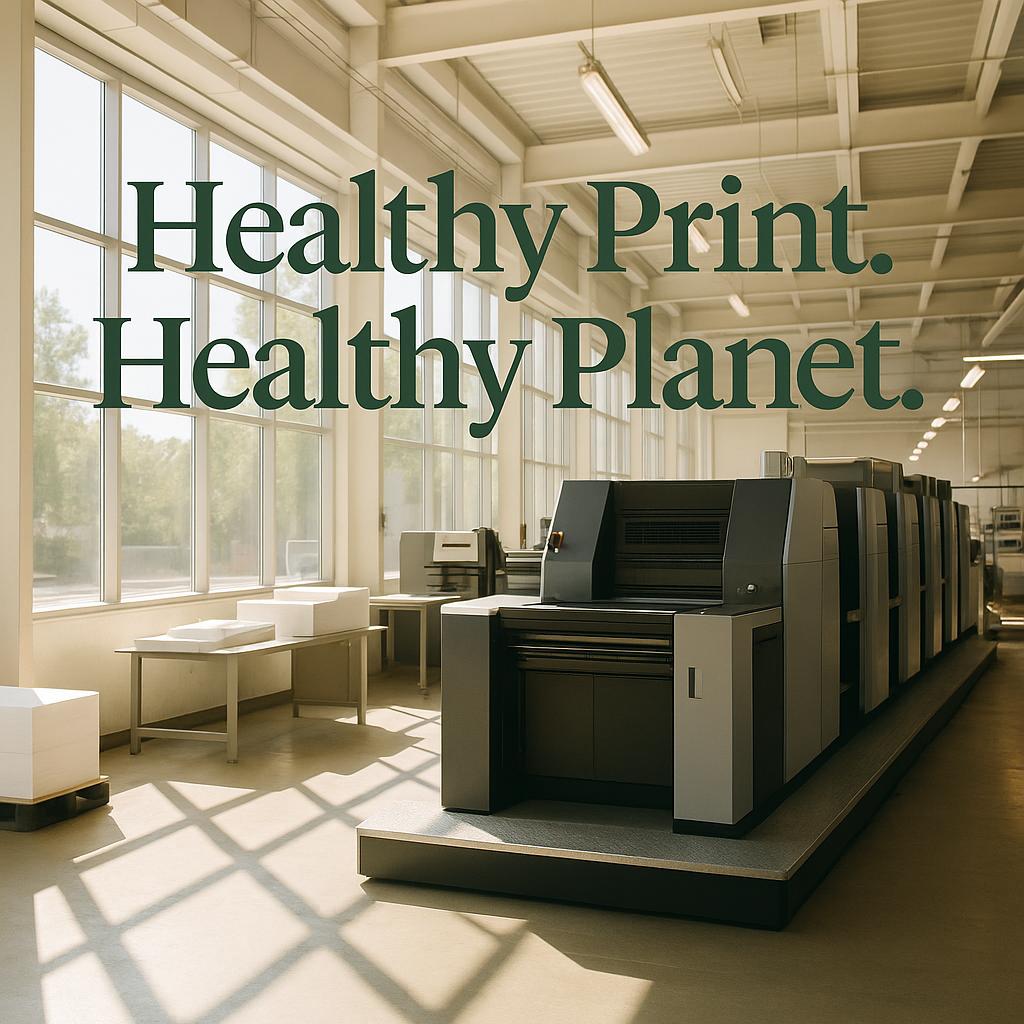
From Tokyo to Berlin, pressrooms are being redesigned with natural light, biophilic elements, and designated quiet zones that reduce fatigue and boost creativity. Sustainability experts like Heidelberg’s Marco Stein note that healthier workers do better work: “You can’t print brilliance if your workforce is burned out.” And that mindset is spreading. The industry is recognizing that inspired output begins with a well-balanced team.
That same spirit of wellness is powering an eco-press revolution. Printers around the world are transitioning to waterless presses, low-VOC inks, and solvent-free cleaning systems — choices that once seemed optional but are now essential. In Lagos and Nairobi, innovative startups are pushing boundaries with soy-based inks sourced from local crops, reducing respiratory risks while minimizing environmental impact. The message is clear: sustainable print is healthy print. As Blessing Adebayo of Eco Press Africa puts it, “When you switch to plant-based inks, you’re protecting both your lungs and the planet.”
Mental wellness is another frontier finally receiving the attention it deserves. Print has always been a deadline-driven world where overnight runs and high-pressure output can quietly take a psychological toll. Progressive companies like Canon, HP, and DCS Integrated Media Limited are introducing “Mindful Production” practices that include flexible shifts, guided meditation sessions, and well-planned rotation systems. The result is a workforce that is more focused, more loyal, and less prone to costly errors.
Even the soundscape of the pressroom is changing. Traditional machines often roar at 90 decibels or more, contributing to operator fatigue and long-term hearing strain. The new generation of digital presses offers a different experience — quieter, smoother, more humane. Some European facilities are even building sound-therapy spaces adjacent to production floors, blending natural acoustics with greenery to help operators decompress. It’s a sign of an industry acknowledging its hidden hazards and redesigning them with intention.
Wellness is also shaping the materials customers demand. As consumers become more conscious of what they touch, smell, and bring into their homes, the call for non-toxic coatings, scent-free packaging, and recycled fibers is growing louder. Luxury brands are responding with biodegradable inks and organic paper substrates — proof that health and premium quality can coexist. As Aisha Bello of The Print Renaissance Collective puts it, “Wellness is the new luxury, even in print.”
Africa is carving an exciting role in this wellness movement. From Lagos to Cape Town, entrepreneurs are pioneering solar-powered pressrooms, bamboo-based papers, toxin-free packaging systems, and community-driven recycling models. These innovations not only protect the environment but create new economic pathways — positioning the continent as a rising leader in healthy print practices.
And as the industry heals itself physically and environmentally, a new frontier is emerging: print that soothes. The future of print could include lavender-infused materials, eco-ink murals designed to reduce anxiety, and biophilic print installations that transform workspaces into wellness zones. In this next phase, print won’t just carry messages — it will comfort, calm, and connect.
Through clean technologies, environmentally conscious materials, supportive work environments, and a renewed focus on human wellbeing, the print industry is rewriting its narrative. It is not fading; it is transforming. Not shrinking; but strengthening.
The truth is simple and powerful: print is healing — page by page, press by press, innovation by innovation.