Copied: Naomi Chima
NAOMI CHIMA writes on the woes of printers whose industry has been hugely impacted by the COVID-19 pandemic and the tough business environment in the country
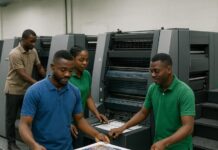
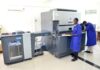
Justice Aloku was once an influential business owner in the Nigerian printing press. He had three industrial printing shops in the popular Somolu Market, a suburb that hosts a large number of printers in the Somolu Local Government Area of Lagos State.
At the time his business was flourishing, Aloku had more than 100 casual workers and about 30 full-time workers; he was living the dream every businessman craved having built a reputable clientele base that made him one of the most sought-after printers in Somolu Market, and by extension, Lagos State.
He was known for printing popular Christian books, including the ‘Open Heavens’, a devotional guide by the revered Pastor E.A Adeboye.
But in an unexpected twist of events, the COVID-19 pandemic dealt a huge blow to Aloku’s burgeoning printing business.
As the world grappled with the deadly virus, restrictions and lockdowns were imposed as measures to guarantee human safety. Private and social functions were banned, among other avenues that Aloku’s business had been benefitting from.
Aloku’s business started witnessing a steady decline in patronage, as the printing of textbooks, notebooks and hymns was no longer fashionable, and in adjusting to the new normal, people resorted to digital methods of printing.
“Little by little, I watched as my business faded away for lack of funds, the high cost of machine and materials, with little or no capital turnovers from the jobs we did.
“I used to source and pay heavily for the jobs I did for clients who would not pay us until we finished their jobs, so we used our money to do the jobs and then got paid on a later day. I needed funds, but who would help you?
“I applied for a loan in 2017 from the Bank of Industries to help me buy a recent printing machine that could help my business; it took three years for the loan to come and it was paid straight to the company that supplied the machine, worth N7.1m.
“Then COVID-19 came and I couldn’t do anything. The machine didn’t work for long and developed faults that cost me almost N2m to fix. I could no longer manage my workers and had to relieve them without pay. Also, customers that I had an unwritten contract with all pulled out,” Aloku said, as a tear dropped from his misty eyes.
In a regrettable tone, Aloku said he sold his printing machines as scrap, adding that while trying to cope with the harsh reality of life, he fell into a coma for several months and battled a stroke.
After surviving the medical conditions, Aluko, who was once a business tycoon, said he was now an e-hailing driver and had been using the money he gets from the business to fend for his family.
Like Aloku, 40-year-old Agatha Adimike, who was working with a reputable printing firm, got relieved from her job because the pandemic affected her boss’ capacity to keep up with paying workers at the firm.
Adimike, who possessed 15 years of experience in the printing industry, said she became jobless shortly after she got married.
Unlike Aluko, who became a commercial driver, Adimike had become a fruit seller in Ikorodu where she relocated with her family.
She said, “I had just got married and was using part of the money I earned to support my husband who earned N50,000 as a teacher in one of the secondary schools in Somolu.
“Our company was already facing the crisis of lack of good clients, and my boss was borrowing heavily to do business for clients, who either paid lesser than spent or rejected the designs.
“My boss owed me three months’ salary when he relieved me of my job when the lockdown started. With no savings at hand and nothing else to do, I became devastated and confused.
“I remember sleeping without food for several nights. I was begging family, friends and church members to sustain myself and my husband. After the lockdown, I was pushed to start selling fruits. That is what I still do today.”
However, a 33-year-old printer, Oluwamayowa Raphael, said to survive as a printer, he combined his printing business with graphics design and social media.
Raphael, who is the Chief Executive Officer of D’Mayors House, was one of Aloku’s workers before the latter’s business sunk.
He said, “Before 2020, we saw it coming (the business crumbling) but we didn’t think it was going to hit us that much; it started with some of our clients withdrawing completely. It was a steady decline. Before then, we used to boast 50,000 to 70,000 copies of books to be printed between two and three months.
“It was a challenging time for me; I was a 300-Level student of Building Technology in Education at the University of Lagos, Akoka. It felt so bad because as a worker, I depended so much on my salary. There is a margin that needs to be filled in the printing industry that no one is attending to.
“We talked about it at the Printers Forum but nothing was done. I don’t go to their meetings anymore because they have not been of help. People go through rigorous processes to get loans from them, aside from the time frame which can range from two to three years; sometimes, if you don’t have connections with people who can stand as sureties for you, you end up not getting the loan.”
The Delta State-born businessman also revealed that the size of their machine puts them at risk of getting lucrative jobs from clients.
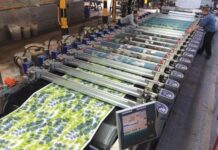
He added, “My friend and I got the machine for N4.7m, but it is now N5.2m and this is like the least of this type of machine. The machine is a six feet large format machine; we have 8, 10, and 12 feet and they are larger and very expensive.
“The competition is high with a small market and business is not how we hoped it would be. The size of the machine is a challenge for us; our clients would prefer to do business with people with bigger machines than trust us to deliver.”