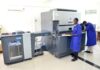
In today’s fast-paced printing environment, quality and deadlines dominate conversations. Yet, one subject often remains in the background — the health of the people who keep our presses running. The printing trade, while rewarding and dynamic, presents a range of occupational hazards that are frequently underestimated. From posture problems to chemical exposure, these risks can gradually undermine productivity and, more importantly, the wellbeing of skilled professionals.
Posture and Musculoskeletal Strain
Long hours at the press or computer, repetitive lifting of heavy paper stocks, and awkward bending positions are part of the daily reality in print operations. Over time, these habits can lead to back pain, stiff joints, or repetitive strain injuries — conditions that silently erode efficiency and morale.
Industry Insight: Forward-looking companies are investing in ergonomic workstations and staff training on safe handling practices. These small adjustments can have long-term benefits for both workers and business performance.
Noise Pollution: The Silent Damage
The hum and rhythm of print machinery are the soundtrack of our industry, but they come with a hidden cost. Prolonged exposure to elevated noise levels can cause gradual hearing loss, often unnoticed until it is irreversible.
Practical Tip: Noise-cancelling ear protection should be standard, and regular hearing assessments are recommended for staff working closest to heavy machinery.
Air Quality and Chemical Exposure
Traditional inks, solvents, and cleaning agents remain integral to production, but they also release fumes that compromise indoor air quality. In poorly ventilated spaces, the risks range from respiratory issues to skin irritation. Add to this the fine dust from paper handling, and the concern grows.
Best Practice: Improved ventilation systems, protective equipment, and a shift toward eco-friendly inks are now regarded as essential investments rather than optional extras.
Eye Strain in the Digital Workflow
Prepress, design, and publishing teams face their own challenges: long hours in front of screens. Digital eye strain manifests in headaches, blurred vision, and fatigue — all of which reduce productivity.
Recommendation: The widely endorsed “20-20-20 rule” — every 20 minutes, look at something 20 feet away for 20 seconds — helps. So too does the adoption of blue-light filters and routine eye examinations.
A Call to Action for the Industry
The printing sector has invested heavily in technology, automation, and innovation. It is time to match that investment with an equal commitment to the workforce that drives the industry. Protecting employee health is not merely a compliance measure; it is a strategy for sustainability, efficiency, and competitive advantage.
At the end of the day, presses cannot run without people. A healthier workforce means stronger output, fewer disruptions, and a brighter future for the industry we all serve.