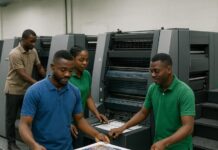
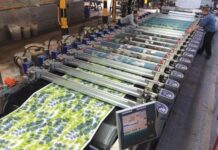
The printing and packaging industry is changing faster than many businesses can afford to ignore. From automated production lines to software that can detect errors before a job reaches the press, Artificial Intelligence (AI) and robotics are steadily moving from the pages of technology reports into the everyday reality of modern print production.
This global shift will take center stage in India from September 24 to 26, 2026, when the Offset Printers Association (OPA), in collaboration with the Department of Printing Technology, Guru Jambheshwar University of Science & Technology (GJUS&T), Hisar, Haryana, hosts an International Conference themed “AI and Robotics: Revolutionizing Printing & Packaging.”
The three-day conference, to be held at the GJUS&T campus, is expected to bring together more than 300 printing professionals, students, academics, researchers and technology providers from India and other parts of the world.
For Nigerian printers, the conversation taking place in Hisar is particularly relevant. While the Nigerian printing industry continues to grapple with familiar challenges such as high energy costs, expensive equipment, skilled manpower shortages, production delays and increasing customer expectations, technology is opening up new ways of doing more with less.
The question is no longer whether AI and automation will affect printing. The more important question is how quickly Nigerian print businesses can adapt to the change.
From Manual Processes to Smarter Production
For many Nigerian print companies, automation may still sound like something reserved for large multinational printing houses with deep pockets. But the global direction of the industry suggests otherwise.
AI can help printers analyze production data, predict maintenance requirements, improve color consistency, reduce material waste, and identify production problems earlier. Robotics, meanwhile, can take over repetitive and physically demanding tasks, particularly in areas such as material handling, finishing, packaging and warehouse operations.
In a market where every liter of diesel, sheet of paper, liter of ink and hour of machine downtime affects the bottom line, even small efficiency improvements can make a significant difference.
This is why the discussions at the Hisar conference should resonate beyond India. Nigerian printers facing the realities of generator-dependent production, rising operating costs and pressure to deliver faster and more accurately can learn from how other markets are using technology to tackle similar business pressures.
Global Experts, Local Lessons
The conference has already attracted international attention, with experts from Greece, Canada and Thailand confirmed to share their experiences and perspectives on the use of AI and robotics in printing and packaging.
The programme will also feature concurrent presentations of the Print Shree Award 2026 and the Presidential Print Awards, recognizing individuals and organizations that have made outstanding contributions to the printing industry.
For the Nigerian printing community, such international platforms provide more than an opportunity to admire what is happening elsewhere. They offer a chance to ask a more important question: What can we take home and make work in our own environment?
Nigeria does not necessarily need to copy the technology models of India, Europe or Asia. Rather, the industry can identify technologies that address its own realities—from reducing generator running hours and minimizing production waste to improving turnaround time and managing labor-intensive processes.
Preparing the Next Generation
Prof. Kamal Mohan Chopra, Chairman of the conference, believes the industry has reached a point where AI and robotics are no longer simply optional technologies but increasingly important tools for survival and growth.
That message should strike a familiar chord in Nigeria. The country’s printing industry is entering an era where traditional experience must increasingly work alongside digital skills, data, automation and intelligent production systems.
The conference is therefore also placing considerable emphasis on education and skills development.
Dr. Vandana Gupta, Chairperson of the Department of Printing Technology at GJUS&T, described the event as an important step in strengthening collaboration between industry and academia. Beyond exposing students and lecturers to emerging technologies, the partnership is expected to create opportunities for research, innovation, skills development and international collaboration.
This is another area where Nigeria has much to gain.
As Nigerian printing companies modernize, the industry will need young professionals who understand not only how to operate a printing press, but also how to work with digital workflows, automation systems, data and AI-powered production tools.
The Nigerian Printing Industry Cannot Afford to Watch from the Sidelines
The significance of the Hisar conference goes beyond the three days of presentations and technology discussions. It is a reminder that the global printing industry is moving towards a more connected, automated, and intelligent future.
For Nigeria, that future comes with both an opportunity and a warning.
The opportunity is to use technology to overcome some of the industry’s longstanding challenges and build more efficient, competitive and sustainable print businesses. The warning is that companies that refuse to evolve may eventually find themselves competing against businesses that can produce faster, waste less, respond more accurately to customers and operate with fewer manual bottlenecks.
The partnership between OPA and GJUS&T is also expected to strengthen cooperation in research, internships, skill development and international linkages, creating a wider platform for knowledge exchange and innovation.
For Nigerian printers, the lesson is clear: AI and robotics may be emerging from global technology centers, but their impact will eventually be felt on the Nigerian shop floor.
The industry therefore needs to start preparing, not necessarily by buying the most expensive machines, but by understanding the technology, training people, improving workflows and identifying where automation can deliver real business value.
Because the future of printing may still involve ink, paper, plates and presses. But increasingly, it will also involve data, intelligence, automation and machines that can work smarter.
And for Nigeria’s printers, the race to that future has already begun.