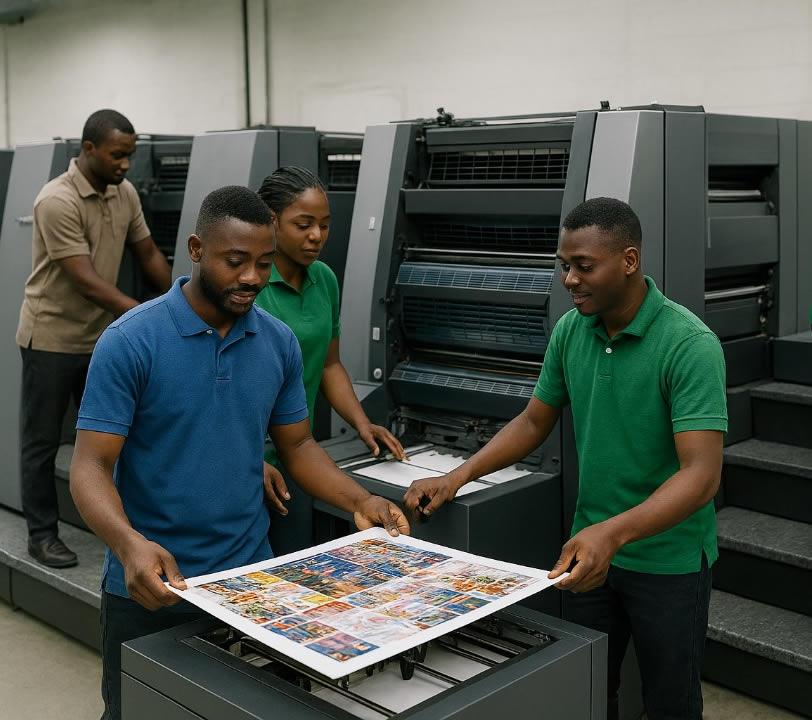


For many Nigerian printers, the word “election” immediately brings one thought to mind: more printing jobs. Posters, flyers, banners, brochures, programmes, stickers, campaign newspapers, souvenirs and other political materials can turn a quiet pressroom into a very busy one.
But there is another side to the election opportunity that deserves attention. More orders do not automatically mean more profit. In fact, if printers are not prepared, a sudden increase in demand can expose weaknesses in paper supply, power, manpower, equipment capacity, cash flow and delivery.
This is why the approaching election should change how Nigerian printers forecast.
Forecasting is not about predicting the future perfectly. It is about looking at the information available today and using it to prepare the business for what is likely to happen tomorrow.
Don’t Wait for the Phone to Start Ringing
The traditional approach is simple: a customer calls, requests a job, the printer calculates the cost, buys the materials, and starts production.
That may work for ordinary business. Election printing can be very different.
Several political campaigns may need thousands of flyers at the same time. An agency may suddenly bring five large orders. A customer who normally orders 5,000 copies may request 50,000. And, as the election draws closer, the most common instruction may become: “We need it urgently.”
If a printer waits until those orders arrive before thinking about paper, ink, production capacity, finishing, power and delivery, the business is already playing catch-up.
The smarter question is: What is likely to happen, and are we ready for it?
Printers should begin studying their existing customers, previous election cycles, and the kinds of jobs they expect to attract. Which clients are likely to require election materials?
What quantities could they need? When might production begin? Which products are likely to dominate demand?
These questions provide something extremely valuable: visibility.
Forecast More Than Sales
A printer may forecast that election-related revenue could increase significantly, but revenue alone does not tell the whole story.
The business must also forecast the resources required to generate that revenue.
More flyer orders mean more paper and ink. More brochures may mean greater finishing requirements. More large-format work means more substrates and ink. More urgent jobs may mean overtime, additional shifts and higher energy consumption.
Therefore, printers need to forecast materials, machine time, manpower, power, logistics and cash flow alongside sales.
Otherwise, a business may celebrate winning a large contract only to discover that it does not have enough paper, finishing capacity or working capital to execute it profitably.
Learn From the Last Election
One of the best forecasting tools is already available to most established printers: their own records.
What happened during the last election cycle?
Which jobs came in most frequently? Which customers ordered the most? Which materials were difficult to source? Where did production bottlenecks occur? How much overtime was required? Which jobs were profitable, and which ones only looked profitable because some costs were overlooked?
These lessons should not remain in the memory of the production manager or business owner.
They should become data for the next election plan.
A printer that understands what happened previously has a much stronger starting point than one simply guessing what might happen next.
Forecast the Problems Too
Good forecasting is not only about predicting how many jobs will arrive. It is also about anticipating what could go wrong.
What happens if the preferred paper supplier runs out of stock? What if diesel or electricity costs increase? What if a major machine breaks down during peak production? What if three customers demand delivery on the same day?
This is where contingency planning becomes important.
Printers should identify backup suppliers, alternative production arrangements, and realistic emergency capacity before the rush begins. They should know which jobs can be outsourced, which processes are potential bottlenecks and where additional temporary manpower may be required.
The objective is simple: reduce surprises.
Turn Forecasting into a Weekly Habit
Forecasting should not be a spreadsheet prepared once and forgotten.
As the election approaches, printers should regularly compare expected demand with confirmed orders, available capacity, material requirements, and projected profit.
If demand is lower than expected, the business can adjust its sales strategy. If demand is rising faster than expected, management can secure materials and additional capacity early.
This makes forecasting a management tool rather than just an accounting exercise.
The Smart Printer Will Prepare Before the Rush
The coming election cycle could create significant opportunities for Nigerian printers and publishers. But the biggest winners may not necessarily be those with the largest machines or the lowest prices.
They may be the businesses that understand their market early, know their production limits, protect their margins, and prepare before the rush.
The election should therefore change the question printers ask.
Instead of saying, “How many election jobs can we get?”, ask:
“How much profitable election work can we realistically handle, and what must we put in place now to deliver it successfully?”
That is the difference between simply responding to an election boom and strategically positioning a printing business to benefit from it.
The election will bring demand. But preparation will determine who can turn that demand into profit.