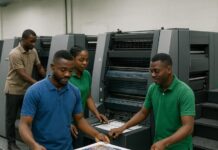
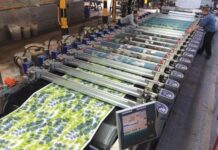
In the Nigerian print market of today, presses alone are not a guarantee for survival. Ink, paper, and machines — the once core markers of competitiveness—have become commodities in a business climate shaped by rising production costs, currency volatility, energy instability, and increasingly price-sensitive clients. Yet, in the midst of all these pressures, a quiet change and transformation is taking place. Printers in Nigeria are now learning that the real battlefield is no longer the shop floor alone, but the value proposition they bring to the customer.
Across the industry, forward-thinking print businesses are re-engineering how they create, communicate, and deliver value—moving beyond traditional print transactions to smarter, service-driven models.
The Cost Reality Shaping New Thinking There is no escaping or running away from reality: paper prices fluctuate unpredictably, consumables imported are tied to forex movements, and the cost of energy remains a constant concern. For a lot of print houses, the instinctive response has been cost-cutting—downsizing, postponing equipment upgrades, or aggressive competitiveness on price.
However, experience shows that price wars and disputes offer only short-term relief. Sustainable growth now depends on how well printers can reposition themselves—not as commodity suppliers, but as problem solvers and production partners.
From Print Jobs to Print Solutions One noticeable shift in the Nigerian print ecosystem is the move from selling “jobs” to offering “solutions.” Printers are engaging clients increasingly earlier in the production cycle—advising on substrates, formats, quantities, and finishes that balance quality with budget realities.
This consultative approach does way more than reduce production errors; it builds unshakable trust. Clients are a lot more willing to return to printers who help them save costs, meet deadlines, and achieve visual impact, rather than those who only execute instructions.
Service Diversification as a Value Engine A lot of Nigerian printers are also discovering and uncovering that value lies beyond the pressroom. Design support, short-run digital printing, packaging prototyping, finishing enhancements, logistics coordination, and even basic brand advisory services are becoming essential revenue extensions.
By bundling services, printers reduce dependence on a single income stream while positioning themselves as one-stop production hubs. In a cost-sensitive market, reliability and convenience often outweigh marginal price differences.
Smarter Operations, Not Just Bigger Machines You do not need to break the bank to re-engineer value. For a lot of print businesses, measurable gains are achieved through small, steady adjustments like process optimization, better scheduling, waste reduction, and proactive equipment care. and preventive maintenance—are delivering measurable gains for many print businesses.
Even modest Digital adoption is transforming the workflows. By utilizing simple, automated tracking, the client’s communication tool, and basic production data, printing firms can make smarter decisions, minimize downtime, and accelerate turnaround times. In today’s market, speed and efficiency-not scale- are the primary competitive differentiators.
Packaging and Labels: A Strategic Pivot As commercial print volumes/numbers tighten, labels and packaging continue to offer growth opportunities. Printers in Nigeria who have successfully transitioned and moved into these segments can understand that packaging is not just about numbers or volumes—it is all about consistency, compliance, and functionality.
Driven by recent shifts and changes, operators are rethinking quality standards and finishing capabilities. Investing in expertise for FMCG, pharmaceuticals, and agribusiness packaging is yielding more stable demand in tough economic conditions.
Re-Defining the Customer Relationship Value re-engineering also extends to how printers relate to clients. Flexible structures for payments, better and clearer communication, realistic delivery timelines, and after-job follow-ups are becoming powerful differentiators.
In a market where currency is trust, printers who demonstrate professionalism and transparency are way more likely to retain customers—even when competitors offer lower prices.
People Still Matter Beyond technological advancements and strategic planning, a proficient and engaging workforce remains the cornerstone of value generation. Nigerian printing firms investing in training -whether structured or on the job are better equipped to pivot, innovate, and maintain consistent quality
Empowered teams/staff reduce errors or mistakes, enhance customer experience, and allow businesses respond swiftly to market shifts. In a cost-conscious environment, expertise serves as a vital tool for cost reduction.
Beyond Survival to Sustainability The Nigerian print sector has reached a pivotal crossroads. The period of competing purely on volume and low cost is coming to an end. Taking its place is a strategic, quality-centric model where experts’ insights, customer care, and strong partnerships are priorities alongside technological capability. Those who look beyond basic production, recognizing that true value is meticulously crafted, will not only weather the current economic hardships but will also emerge more influential and perfectly positioned for the industry’s evolution. Printers who shift their focus from mere production to engineered, high-value solutions will not just survive economic challenges, but will become more relevant, resilient, and future ready withing Nigeria’s evolving printing landscape.