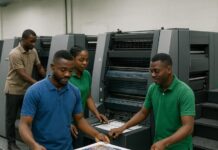


On a busy morning in Shomolu, Lagos, one of Nigeria’s most vibrant printing hubs, a printer stands beside a machine he has operated for nearly two decades. Around him, the familiar sounds of production fill the workshop. Jobs are being completed, customers are calling, and deadlines are looming.
Yet despite the activity, something has changed, not inside his print shop, but outside it.
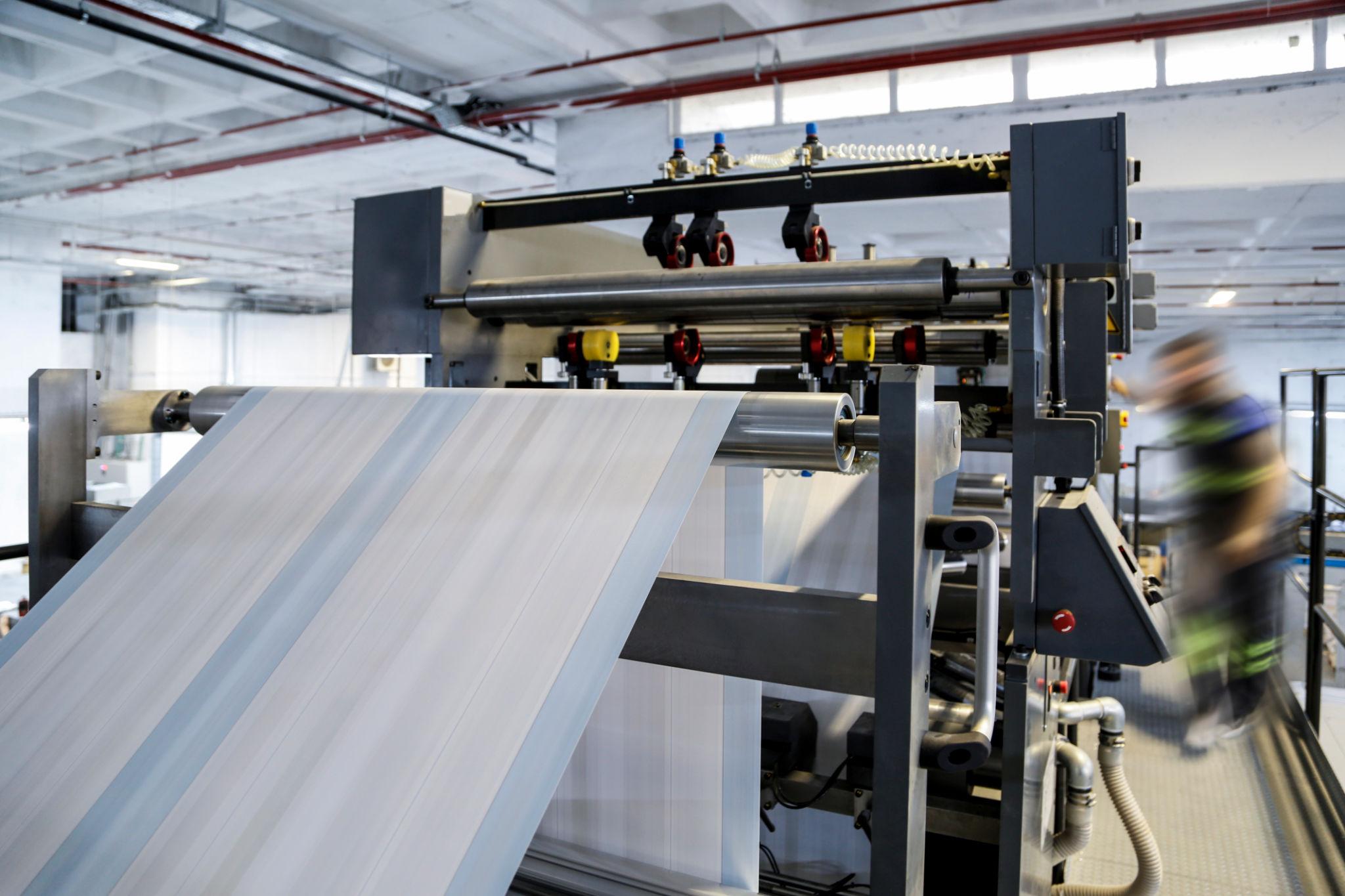
Across the world, printing is becoming faster, smarter, and increasingly automated. Machines are communicating with software. Orders are arriving through websites without a single phone call. Production workflows are being managed from computers and smartphones. Artificial Intelligence is beginning to influence design, customer service, and business operations.
For many small printers, these developments raise a difficult question:
Will automation create new opportunities, or will it leave smaller operators behind?
The answer may determine the future of thousands of printing businesses across Nigeria.
The Fear Behind the Future
Whenever a new technology emerges, fear often follows.
The Industrial Revolution brought fears of job losses. Computers sparked concerns about the disappearance of traditional office roles. The internet changed how businesses communicated and sold products.
Automation is creating similar anxieties.
Many small printers worry that sophisticated machinery, digital workflows, and AI-powered systems will favor only large companies with deep pockets and substantial resources.
The concern is understandable.
In an industry already struggling with rising electricity costs, foreign exchange volatility, expensive consumables, and intense competition, the prospect of investing in advanced technology can seem overwhelming.
Some business owners wonder whether they can afford to keep up.
Others question whether they can afford not to.
Automation Is Not Just About Machines
One of the biggest misconceptions about automation is that it only involves expensive equipment.
In reality, automation begins with processes.
A small print shop may not own the latest digital press, but it can automate customer communication through messaging platforms. It can use accounting software to track expenses. It can manage orders electronically instead of relying on paper records. It can schedule jobs digitally and reduce costly production errors.
Automation, at its core, is about working smarter rather than harder.
The businesses benefiting most from technology are not always the largest. Often, they are the most adaptable.
A printer who eliminates repetitive manual tasks gains more time to focus on customer relationships, quality control, marketing, and business growth.
In many cases, small improvements produce significant results.
The Advantage of Being Small
Ironically, the automation revolution may offer some unique advantages to smaller businesses.
Large organizations often move slowly. Decision-making processes can be complex. Implementing change across multiple departments can take months.
Small businesses, on the other hand, can be remarkably agile.
A small printer can adopt a new software platform within days. It can experiment with online ordering systems. It can quickly respond to customer feedback and changing market demands.
In today’s business environment, flexibility is becoming one of the most valuable competitive advantages.
The future may not belong solely to the biggest printers.
It may belong to the printers who learn the fastest.
Customers Are Changing Faster Than Technology
Perhaps the most important reason small printers must pay attention to automation has little to do with technology itself.
It has everything to do with customers.
Today’s clients expect speed.
They expect convenience.
They expect updates, transparency, and fast responses.
A customer placing an order for wedding invitations, packaging materials, campaign posters, or branded merchandise increasingly wants a seamless experience from start to finish.
Businesses that continue to rely entirely on traditional methods risk creating frustration for modern customers.
The challenge is no longer simply producing quality print.
The challenge is delivering a quality customer experience.
Technology is becoming an essential part of that experience.
Artificial Intelligence: Threat or Opportunity?
No discussion about automation is complete without mentioning Artificial Intelligence.
The rise of AI has generated excitement, curiosity, and concern across virtually every industry.
Some printers fear AI could replace designers, customer service personnel, or administrative staff.
The reality is likely more nuanced.
AI can generate design concepts, draft marketing content, assist with customer inquiries, analyze business data, and streamline repetitive tasks.
However, it cannot replace the human understanding that defines successful printing businesses.
Customers still need advice. Brands still require creativity. Complex production challenges still demand experience and judgment.
The most successful printers will not compete against AI.
They will learn to work alongside it.
Just as digital printing did not eliminate printing itself, AI is unlikely to eliminate the need for skilled professionals who understand both technology and customer needs.
The Real Risk Is Standing Still
History offers an important lesson.
Industries rarely disappear because of technology.
Businesses struggle when they fail to adapt to technology.
The print companies that survived the transition from manual typesetting to desktop publishing were those willing to evolve. Those that embraced digital printing found new opportunities. Those that adopted modern finishing equipment improved productivity and profitability.
The same principle applies today.
The greatest threat facing small printers may not be automation itself.
It may be the belief that automation is someone else’s concern.
A Future Worth Building
Nigeria’s printing industry has always been defined by resilience.
From economic downturns and power shortages to changing customer demands and market disruptions, printers have consistently found ways to adapt and survive.
The automation revolution is simply the latest chapter in that story.
For small printers, the path forward does not require overnight transformation or massive capital expenditure.
It begins with a mindset.
A willingness to learn.
A commitment to improve.
A recognition that technology is not replacing the industry, it is reshaping it.
The future pressroom may look very different from the one we know today. It may be more connected, more digital, and more automated.
But it will still need entrepreneurs, innovators, problem-solvers, and skilled professionals to bring it to life.
So, can small printers survive the automation revolution?
The better question may be this:
Can they afford not to be part of it?
For those willing to embrace change, the answer is clear. The automation revolution is not the end of opportunity for small printers.
It may just be the beginning of a new one.