

The Future of Packaging Printing Will Belong to Those Who Print Smarter, Not Just Faster
The Nigerian printing industry has always been built on resilience. From surviving economic downturns and currency fluctuations to managing unpredictable power supply and rising production costs, printers across the country have consistently found ways to keep businesses running.
But today, the pressure is different.
The cost of raw materials continues to rise. Imported substrates and consumables are becoming increasingly expensive. Energy costs are eating deeper into production margins. Customers are demanding higher quality, shorter turnaround times, and competitive pricing all while expecting printers to maintain consistency across thousands or millions of impressions.
For many Nigerian printers and converters, the question is no longer simply, “How do we get more jobs?”
The bigger question is:
“How do we become more profitable with the jobs we already have?”
This is where smart flexographic technology is changing the conversation.
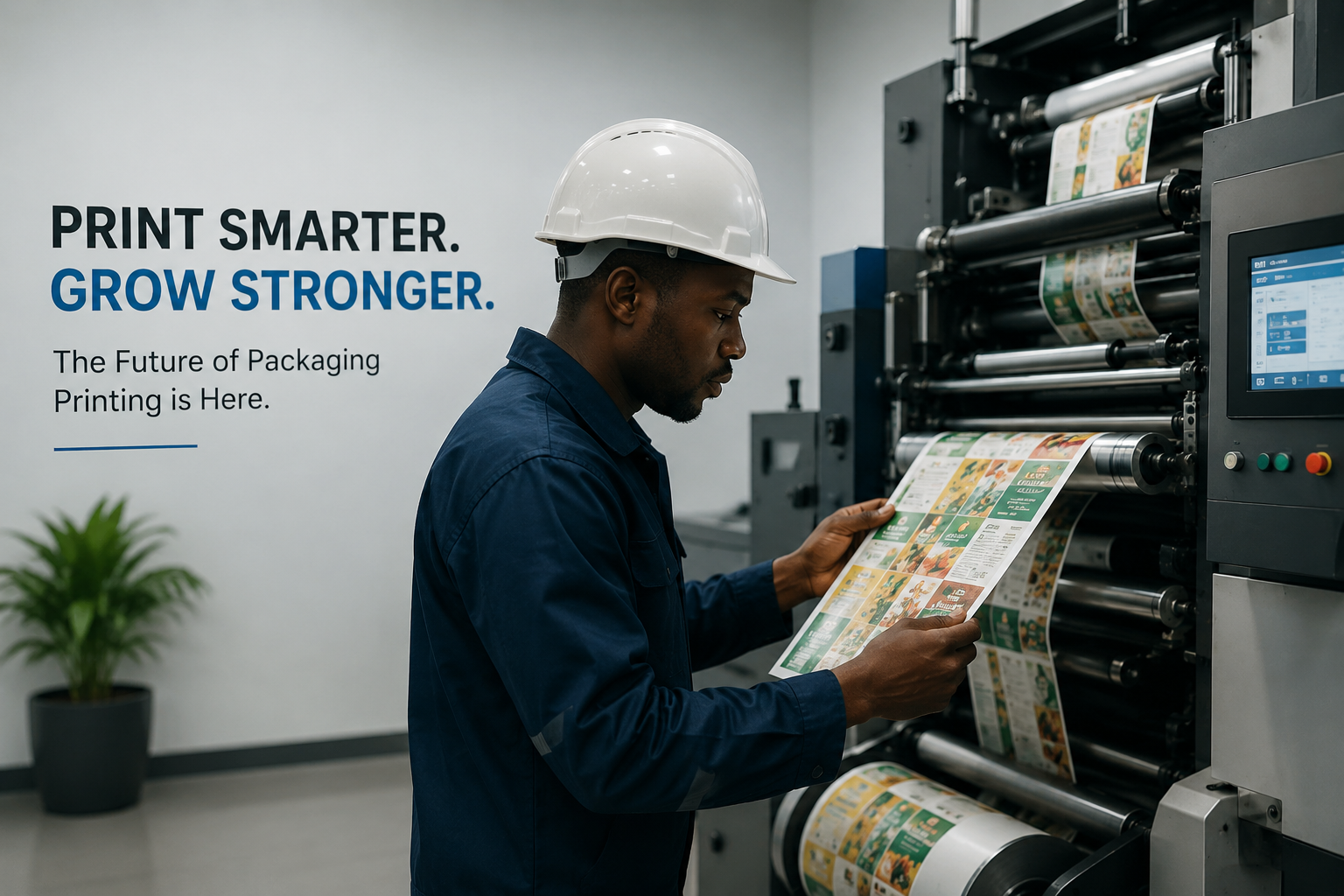
Flexo printing is no longer just about machines, plates, ink, and substrates. The modern flexo environment has evolved into an integrated production ecosystem where automation, workflow intelligence, color control, and data-driven decision-making are helping printers reduce waste, improve efficiency, and unlock new levels of profitability.
At the heart of this transformation is a simple reality:
Every saved minute, every reduced error, and every avoided waste directly impacts the bottom line.
The Hidden Cost of Inefficiency in Print Production
In many printing companies, the biggest financial losses are not always visible.
They are hidden inside everyday production challenges:
- Repeated job adjustments.
- Excessive material waste.
- Inconsistent color reproduction.
- Long machine setup times.
- Manual processes that slow production.
- Production delays caused by avoidable errors.
- Rejected jobs that consume valuable resources.
A printer may look busy, machines may be running, and orders may be coming in, but profitability can quietly disappear through inefficiencies.
In a competitive market like Nigeria, where businesses are already dealing with high operational expenses, improving efficiency is no longer a luxury. It is becoming a survival strategy.
This is why leading printers globally are investing in smarter flexo solutions that help them control costs while delivering premium-quality packaging.
Smart Flexo: Turning Technology into Business Growth
The next generation of flexographic printing is built around one major idea:
Do more with less.
Modern flexo technology enables printers to achieve greater output while reducing the resources required to produce each job.
Through improved prepress workflows, automated plate production, advanced color management, and intelligent production systems, printers can minimize errors before they reach the press.
For Nigerian printers, this creates several advantages:
- Reduced Material Waste
Waste remains one of the biggest challenges in packaging production.
Every meter of wasted substrate, every unnecessary plate remake, and every rejected print job represents money leaving the business.
Smart flexo workflows help companies identify problems earlier, improve job preparation, and achieve greater accuracy before production begins.
The result?
Less waste. More usable output. Better margins.
- Faster Production Without Sacrificing Quality
Customers today want speed—but they also want perfection.
Whether producing labels for beverages, pharmaceutical packaging, food wrappers, or consumer goods, printers are expected to deliver consistent quality under tight deadlines.
Automation helps reduce manual intervention and improves production speed, allowing companies to handle more jobs without necessarily increasing operational pressure.
In a market where turnaround time can determine whether a customer returns or moves to a competitor, speed becomes a competitive advantage.
- Better Color Consistency and Customer Confidence
For packaging brands, color is not just decoration.
It represents identity.
A customer buying a product from a supermarket shelf expects the packaging colour to look the same every time. A variation in color between production runs can damage brand perception.
Modern flexo technologies provide better color control and repeatability, helping printers deliver the consistency that global and local brands demand.
This is especially important as Nigerian manufacturers increasingly compete for regional and international markets.
From Traditional Printer to Smart Manufacturing Partner
The future of printing is moving beyond the idea of being only a production house.
The most successful printers of tomorrow will operate as technology-driven manufacturing partners.
They will combine:
- Skilled people.
- Advanced equipment.
- Automated workflows.
- Data-driven production decisions.
- Sustainable practices.
- Continuous improvement.
This transformation is particularly important for Nigeria’s packaging sector, which continues to experience strong demand from industries such as food and beverage, pharmaceuticals, cosmetics, agriculture, and consumer goods.
As more Nigerian manufacturers expand their production capacity, they will need packaging partners who can deliver quality, reliability, and efficiency.
Printers who embrace smart flexo technology will be better positioned to capture these opportunities.
Why FLEXO EDGE 2026 Matters for Nigeria’s Printing Future
Industry platforms like FLEXO EDGE 2026, organized by Randomsoft Limited, are becoming increasingly important because they provide a meeting point for technology, knowledge sharing, and industry advancement.
Theme: From Cost Pressure to Competitive Advantage: How Smart Flexo Technology Can Save Nigerian Printers Millions
Date: Tuesday, 28 July 2026
Time: 9:00 AM
Venue: Marriott Hotel, Ikeja, Lagos
The event represents more than a technology showcase.
It is a conversation about the future of packaging production in Nigeria.
It brings together printers, converters, packaging professionals, technology providers, and industry stakeholders to explore how innovation can address real business challenges.
From improving workflow efficiency to understanding the latest developments in flexographic printing, the event provides insights that can help companies make smarter investment decisions.
For businesses operating in an environment where every naira matters, access to the right knowledge can be as valuable as access to the right equipment.
To learn more about the event and connect with the organizers:
Website: www.randomsoftech.com
LinkedIn: @randomsoft ltd
Instagram: @randomsoft
The Million-Naira Question: Invest or Continue Losing?
For many printers, investing in technology may initially appear expensive.
But the cost of not investing can be even higher.
Every inefficient process has a financial impact.
Every production delay has a cost.
Every rejected job affects profitability.
The future belongs to companies that understand that technology is not simply an expense—it is a tool for protecting and growing revenue.
Smart flexo technology is not about replacing the experience and craftsmanship that printers have built over decades. It is about empowering that expertise with better tools.
It is about helping printers move from constantly fighting costs to creating competitive advantages.
Printing Smarter: The Next Chapter of Nigerian Flexo
Nigeria’s printing industry has never lacked determination. What it needs now is greater access to technology, skills, and solutions that can convert resilience into sustainable growth.
The printers who succeed in the coming years will not necessarily be those with the biggest machines or the largest facilities.
They will be those who understand efficiency.
Those who embrace innovation.
Those who recognise that profitability is created not only by the jobs they win, but by how intelligently they produce those jobs.
The future of flexo printing is smarter, faster, and more connected.
And for Nigerian printers ready to embrace the change, that future represents not just survival—but a powerful competitive advantage.