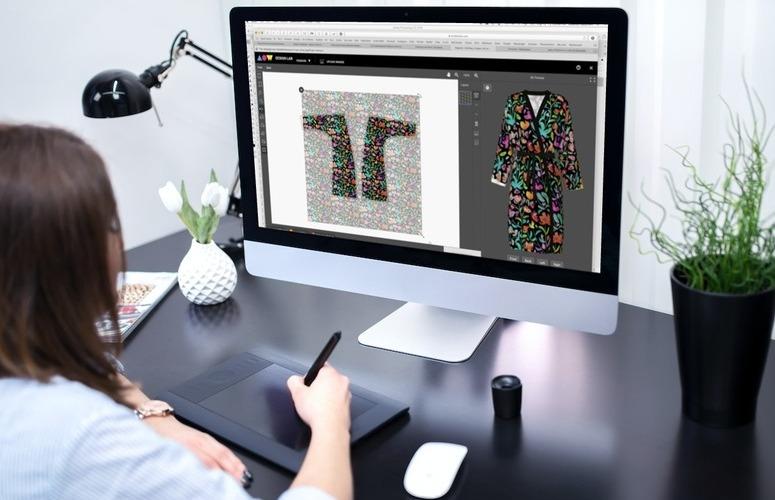


When powerful Artificial Intelligence AI image-generation tools first became available to the public, many professionals in Nigeria’s textile, fashion, and surface design industry viewed them with deep suspicion. For designers who had spent years mastering hand sketching, color harmony, fabric aesthetics, and digital design software, the emergence of a tool capable of producing attractive patterns within seconds sounded like a direct threat to their profession.
The concern was understandable. If anyone could type a few words into a computer and instantly generate a beautiful Ankara-inspired print, Adire motif or fashion pattern, what then became of years of training, creativity and technical expertise?
At the time, it appeared the future would belong less to talented designers and more to people who simply knew how to write effective prompts. Across design studios in Lagos, Aba, Kano and other manufacturing hubs, many professionals questioned whether AI would eventually make their skills irrelevant.
Naturally, resistance followed. Many designers saw AI as a competitor rather than a creative partner. Today, however, the conversation has changed dramatically. Interestingly, it was not Nigerian designers who changed. The technology did.
Understanding What Designers Really Need
Over the last two years, AI has evolved beyond producing attractive images. Developers have begun building solutions that address the practical realities of textile and print production, realities that Nigerian manufacturers understand all too well.
A textile design is far more than a beautiful picture.
Before it reaches the market, it must repeat seamlessly across meters of fabric, maintain accurate dimensions, preserve color consistency, and be compatible with digital textile printers, rotary screen-printing machines, or weaving equipment. Whether the fabric is being produced locally or outsourced abroad, these technical requirements cannot be ignored.
The early AI systems were impressive demonstrations of what technology could do, but they rarely produced designs ready for commercial production. Most generated attractive visuals that still required extensive correction before they could be used in a factory.
For Nigerian textile manufacturers and designers working under tight production schedules and rising operating costs, that simply wasn’t practical.
From Creative Threat to Productivity Partner
The real value of AI has emerged not from replacing designers but from helping them work faster and more efficiently.
Rather than attempting to create finished textile collections from scratch, today’s AI tools excel at handling repetitive technical tasks that consume valuable production time.
Take seamless pattern repeats as an example. Creating repeat patterns has traditionally been one of the most painstaking stages of textile design. Designers spend hours ensuring edges align perfectly, correcting joins and balancing motifs so that the repeat is virtually invisible when printed across thousands of meters of fabric.
Modern AI can now automate much of this process within minutes.
Similarly, enlarging artwork for large-format textile printing or billboard-scale graphics once required painstaking manual redrawing to avoid loss of quality. AI-powered image enhancement now preserves fine details while increasing resolution significantly, saving countless hours of labor.
These are not necessarily creative activities.
They are technical processes that most designers would gladly delegate if given the opportunity.
That is precisely where AI delivers its greatest value, not by replacing creativity, but by eliminating repetitive work that slows creativity down.
A Lesson for Nigeria’s Textile and Print Industry
Designers often spend long hours preparing files for production, correcting artwork, checking colors, fixing resolution issues, and ensuring patterns repeat perfectly before a job can go to print. AI is increasingly becoming useful in these areas. It can help create seamless repeats, improve print-ready files, separate colors more accurately, clean up artwork, enhance image quality, and reduce costly prepress mistakes.
For many businesses, these are not just technical conveniences; they are practical solutions that save time, reduce waste, lower production costs, and improve consistency. In a business environment where companies are already dealing with high diesel prices, expensive imported materials, exchange-rate fluctuations, and rising operating expenses, any tool that helps reduce rework and improve efficiency is worth attention.
In other words, AI’s greatest value may not be replacing human creativity, but giving Nigerian designers and printers more time to focus on the creative and strategic work that truly sets their businesses apart.
Creativity Still Belongs to Humans
No matter how advanced AI becomes, it cannot replicate the cultural intuition that Nigerian designers bring to their work. Technology can generate visually appealing patterns, but it does not understand the stories, traditions, and emotions woven into Nigeria’s rich textile heritage.
AI may imitate the look of Adire, Akwete, Aso Oke, or other indigenous patterns, but it cannot fully grasp their cultural significance or the history they represent. Neither can it anticipate subtle shifts in local fashion tastes nor understand what truly resonates with Nigerian consumers, as experienced designers do.
That human touch remains irreplaceable. Great design is more than arranging colors and shapes. It is about telling stories, preserving heritage, understanding markets, and creating products that people can identify with. These are qualities born from lived experiences, creativity, and cultural awareness, not algorithms.
This is why the future of design should not be seen as a contest between humans and machines. Instead, it is about combining the strengths of both. Designers bring imagination, originality, cultural intelligence, and market insight, while AI delivers speed, precision, and efficiency in handling repetitive technical tasks. Together, they create a smarter, more productive design process, one that allows creativity to flourish while improving quality, consistency, and turnaround time.
Looking Ahead
Software developers serving the textile and printing industries are beginning to recognize this reality. The most useful AI solutions are no longer marketed as replacements for creative professionals. Instead, they are being integrated into Computer-Aided Design (CAD) systems and production workflows as intelligent assistants that simplify technical processes.
For businesses that embrace these practical applications, AI represents an opportunity to improve productivity without sacrificing creativity.
Those who continue viewing AI solely as a machine for generating random patterns, or ignore it altogether, may miss one of the most significant productivity shifts currently taking place in the industry.
The AI revolution is indeed happening. But it is proving to be quieter, more practical, and far more beneficial than many Nigerian designers initially feared. In the end, the biggest surprise is this: AI is not taking creativity away from designers.
It is taking away the repetitive tasks they never enjoyed doing in the first place, allowing them to focus on what truly adds value, creating designs that inspire, connect with people, and strengthen Nigeria’s growing creative and manufacturing industries.