

Walk into any Nigerian supermarket, market, restaurant or roadside shop, and one thing is impossible to miss: packaging is everywhere. From sachets and bottles to cartons, wrappers and takeaway packs, packaging has become an essential part of how products are manufactured, transported, sold and consumed. But as Nigeria’s waste challenge grows and businesses face increasing pressure to operate responsibly, an important question is emerging: Are we really making our packaging sustainable, or are we simply making it look sustainable?
For many businesses, sustainability still begins and ends with material selection. The solution is often to use recyclable materials, add recycled content, or replace conventional plastics with biodegradable or compostable alternatives. These are valuable steps, but they do not tell the whole story. A package being labelled “recyclable” does not automatically mean it will be recycled, particularly in a market where collection systems, recycling infrastructure and consumer awareness remain uneven.
Nigeria needs to broaden the conversation.
Sustainable packaging should be considered from the moment raw materials are sourced to the point where the finished package reaches the consumer, and beyond, to what happens after it is discarded. How much energy was used to manufacture it? How much material was wasted during production? How far did it travel? Can it protect the product effectively? Is it affordable for the consumer? And, most importantly, is there a realistic system for recovering or disposing of it after use?
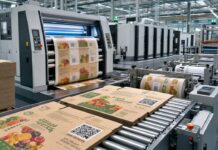
These questions matter because sustainability and business efficiency are increasingly connected. A company that reduces unnecessary packaging may not only generate less waste but also reduce its material costs, transportation expenses and storage requirements. A printer or packaging converter that improves production efficiency can reduce paper, ink, substrate and energy waste while improving profitability. In a country where businesses are already battling high energy and logistics costs, these seemingly small improvements can make a significant difference.
Consumer behavior must also be part of the equation. Nigerians are becoming more environmentally conscious, but sustainability cannot depend entirely on consumers doing the “right thing” after purchase. If recycling requires consumers to travel long distances to find collection points, or if recyclable packaging is mixed with general waste, the sustainability promise quickly loses its meaning. Businesses therefore need to design packaging that reduces unnecessary material, communicates clearly and fits realistically into the waste and recycling systems available in Nigeria.
There is also a strong case for collaboration. Manufacturers, printers, packaging companies, recyclers, retailers, policymakers and consumers cannot solve the country’s packaging challenge independently. What is designed in the factory eventually enters the community, and what is discarded by the consumer ultimately affects the wider environment and economy.
The future of sustainable packaging in Nigeria, therefore, will not be determined by simply finding the “greenest” material. It will come from thinking differently about the entire packaging journey, from design and production to transportation, consumption and end-of-life management.
Sustainability is no longer just about putting a green label on a package. It is about making smarter decisions that reduce waste, control costs, improve efficiency and protect the environment.
For Nigerian businesses, the opportunity is clear: don’t just make packaging greener; make the entire system smarter.