

For decades, the Nigerian printing industry has been deeply connected to politics. Every election season brings a flood of jobs, campaign posters, banners, handbills, branded souvenirs, stickers, billboards, and promotional materials that dominate production lines across the country. From Lagos to Kano, Aba to Abuja, many printers often describe election periods as their “harvest season.”
But while political printing creates temporary financial relief, it has also exposed a dangerous reality within the industry: too many print businesses still depend heavily on seasonal jobs for survival.
Once elections end, the excitement fades. Orders slow down. Competition becomes aggressive again. Many printing companies return to battling the familiar pressures of unstable electricity, rising material costs, shrinking profit margins, and unpaid debts. For some businesses, surviving between one political cycle and another has become increasingly difficult.
As Nigeria gradually approaches the 2027 elections, the industry now stands at a critical turning point. The coming political season will certainly create opportunities. Still, the smartest printers are beginning to understand something important: the future of the industry cannot depend on flyers and posters alone.
The next phase of growth will belong to businesses that build sustainable systems before the political boom arrives.
Across Nigeria today, the printing landscape is changing rapidly. Technology is transforming customer expectations. Corporate clients now demand faster turnaround times, premium finishing, and integrated branding solutions. Consumers are paying more attention to packaging quality. Small businesses are investing more in branding and customized products. Even social media businesses now require labels, product packaging, tags, and branded materials to compete effectively.
These changes are creating new opportunities beyond traditional commercial printing.
Packaging, for example, has become one of the most promising sectors for Nigerian printers. As the food, cosmetics, pharmaceutical, and manufacturing industries continue to grow, demand for quality packaging materials is increasing significantly. Local businesses no longer want ordinary packaging; they want professionally branded boxes, labels, pouches, and product wraps that can compete with international standards.
This presents a major opportunity for printers willing to evolve.
Instead of relying solely on campaign posters during election periods, printers can expand into flexible packaging, carton production, labels, and branding materials for SMEs and manufacturers. Nigeria’s growing entrepreneurial culture means thousands of businesses now require consistent packaging support throughout the year, not just during political campaigns.
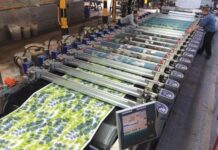
Textile and fabric printing is another fast-rising opportunity.
From campaign shirts and branded caps to corporate uniforms, event souvenirs, and customized apparel, textile printing continues to grow in popularity. With the rise of small fashion brands, religious organizations, schools, and event businesses, printers who diversify into garment branding and fabric customization can create steady income streams that extend far beyond election cycles.
Large-format printing is evolving equally. Billboards and campaign banners may dominate public attention during elections, but outdoor advertising, retail branding, and event production continue throughout the year. Shopping malls, supermarkets, churches, hotels, restaurants, and corporate organizations constantly require visual branding materials. Printers who position themselves as full-service branding partners rather than basic print vendors are more likely to survive in the long term.
However, diversification alone is not enough.
Sustainability in today’s printing business environment also requires operational efficiency. One of the biggest threats facing Nigerian printers remains energy costs. Electricity instability has forced many businesses to rely heavily on generators, drastically increasing production expenses. In some cases, diesel costs consume a significant portion of profits.
Forward-thinking printers are now exploring alternative energy solutions, particularly solar and hybrid power systems. While the initial investment may appear challenging, reducing dependence on diesel can improve long-term profitability and business stability. Energy efficiency is gradually becoming a competitive advantage within the industry.
Another major challenge is the industry’s dependence on imported materials.
The rising exchange rate continues to affect the cost of paper, ink, plates, and spare parts. Many businesses struggle to maintain stable pricing because raw material costs fluctuate constantly. To survive, printers must become more financially strategic, reducing waste, improving inventory management, and exploring local sourcing opportunities wherever possible.
Collaboration may also become one of the industry’s strongest survival tools.
Rather than operating in isolation, printers can form partnerships for bulk purchasing, equipment sharing, and joint production projects. Small and medium-sized print businesses can especially benefit from cooperative structures that reduce operational costs and improve bargaining power with suppliers.
At the same time, professionalism must become a central focus.
As competition increases ahead of 2027, clients will naturally gravitate toward businesses they trust. Reliability, quality control, customer service, and delivery speed will matter more than ever. Political organizations and corporate clients alike are increasingly looking for vendors who can handle large projects professionally and consistently.
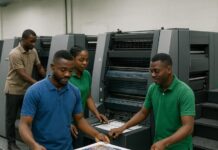
This means printers must invest not only in machines, but also in people, training, and systems.
Digital transformation is another area the industry cannot ignore. Online ordering systems, social media marketing, customer relationship management, and digital workflow solutions are helping modern print businesses operate more efficiently. Today’s customer expects convenience. Printers who embrace digital communication and online service structures may gain a significant advantage over competitors still operating entirely through traditional methods.
Importantly, the road to 2027 should not only be seen as a political opportunity but also as a preparation period.
The election season will undoubtedly generate massive demand for printing services, but businesses that use the period wisely can build stronger foundations for the future. Profits generated during the political boom can be reinvested into equipment upgrades, energy solutions, staff development, and business expansion instead of short-term spending.
The most successful print businesses after 2027 may not necessarily be those that printed the most campaign posters. They may be the companies that used the political season as a stepping stone toward building diversified, modern, and sustainable enterprises.
Nigeria’s printing industry has survived economic downturns, technological disruption, and operational crises because it remains an industry built on resilience and creativity. Yet survival alone is no longer enough. The future demands reinvention.
Beyond flyers and posters lies a much bigger opportunity, an opportunity to transform printing from a seasonal hustle into a sustainable industrial force capable of supporting manufacturing, branding, packaging, and business growth across Nigeria.
And for printers willing to think beyond the next election, the future may be far brighter than the challenges of today suggest.