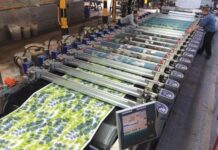
“Every printed page tells a story. But before the ink dries and the pages are bound, another story unfolds—one of imported raw materials, volatile exchange rates, congested ports, rising logistics costs, and an industry searching for stability.”
For Nigeria’s printing and publishing industry, paper is more than a production material. It is the foundation upon which books educate children, newspapers inform citizens, packaging protects products, labels drive commerce, and commercial printers keep businesses visible.
Yet, in recent years, that foundation has become increasingly fragile.
Printers wake up to new paper prices almost as often as they wake up to changes in the foreign exchange market. Publishers postpone print runs while waiting for shipments. Packaging converters scramble to secure enough board to meet delivery deadlines. Importers grapple with shipping delays, customs bottlenecks, and escalating freight costs. Every disruption travel through the value chain until it reaches the customer in the form of higher prices, delayed deliveries, or reduced print volumes.
The question confronting the industry is no longer whether there is a paper supply challenge.
The real question is whether Nigeria can build a print production ecosystem resilient enough to withstand it.
When the Supply Chain Becomes the Story
The modern print industry thrives on predictability. A publisher needs to know when paper will arrive before promising a school that textbooks will be delivered before a new term. A packaging converter cannot commit to a food manufacturer without confidence that board stock will be available. A commercial printer risks losing clients when materials arrive weeks behind schedule.
Unfortunately, predictability has become a luxury.
Nigeria depends heavily on imported paper, paperboard, and specialty printing materials. From coated sheets for premium brochures to lightweight book paper and folding box board for packaging, much of what keeps presses running arrives from overseas. This dependence leaves the industry vulnerable to factors beyond its control: fluctuations in the value of the naira, international shipping disruptions, geopolitical tensions, rising energy costs, and changing global trade policies.
When any link in that chain weakens, Nigerian printers feel the impact almost immediately.
The Cost Beyond the Cost
The conversation about paper prices often focuses on one figure: the cost per ream or per ton.
But the true cost is much broader.
Higher paper prices mean publishers print fewer copies of new titles. Small businesses scale back marketing materials. Printers demand larger deposits from customers to hedge against sudden price changes. Educational institutions struggle to procure learning materials, while consumers ultimately pay more for books, packaging and printed products.
The ripple effect extends beyond the print shop floor. It touches education, manufacturing, retail, healthcare, agriculture and virtually every sector that relies on printed communication or packaged goods.
Paper, therefore, is not simply a commodity; it is strategic infrastructure for economic development.
A Missed Opportunity Waiting to Be Reclaimed
There was a time when Nigeria’s paper industry showed considerable promise.
Paper mills such as the Nigerian Paper Mill in Jebba, the Nigerian Newsprint Manufacturing Company in Oku-Iboku, and the Iwopin Pulp and Paper Mill were established with the ambition of reducing dependence on imports and supporting domestic production.
While many of these facilities have struggled over the years due to policy inconsistencies, inadequate investment, operational challenges, and changing market realities, they remain reminders that Nigeria once envisioned a more self-reliant paper industry.
Today, as import costs continue to climb, conversations about reviving local pulp and paper production are returning with renewed urgency.
A resilient print ecosystem may well depend on whether those conversations translate into practical action.
Looking Beyond Imported Solutions
No country completely isolates itself from global supply chains. Even advanced manufacturing economies import specialized materials.
However, resilience comes from diversification.
For Nigeria, that means expanding the number of supply sources, encouraging local conversion industries, strengthening warehousing capacity, and investing in recycling systems that reduce pressure on imported virgin fiber.
The country generates enormous volumes of recoverable paper waste every day. Offices, schools, supermarkets, banks, factories and households discard tonnes of paper and cardboard that could be collected, processed and returned to the manufacturing cycle.
Developing a stronger recycling ecosystem would not eliminate imports overnight, but it could significantly improve material availability while advancing environmental sustainability.
Technology Can Help Build Stability
Digital transformation is often discussed in relation to faster presses or automated workflows. Yet it also has an important role in supply chain resilience.
Modern inventory management systems allow printers to monitor stock levels in real time, forecast demand more accurately and reduce costly emergency purchases.
Data analytics helps identify seasonal consumption trends.
Artificial intelligence can support procurement planning by predicting material requirements before shortages occur.
Cloud-based collaboration allows publishers, printers, and suppliers to coordinate production schedules more effectively.
In an unpredictable market, better information becomes a competitive advantage.
Collaboration Over Competition
Perhaps the greatest opportunity lies in stronger collaboration across the value chain.
Imagine publishers consolidating paper purchases to negotiate better pricing. Imagine printers sharing logistics networks to reduce transportation costs. Imagine converters partnering with recycling companies to secure a steady stream of recovered fibre. Imagine financial institutions creating tailored funding solutions that enable suppliers to maintain strategic inventories.
No single company can solve Nigeria’s paper supply challenge.
But together, the industry can reduce its exposure to recurring disruptions.
The future belongs to businesses that see collaboration not as a weakness but as a strategic advantage.
Government Has a Role to Play
The private sector cannot build resilience alone.
Policies that encourage investment in local paper manufacturing, improve port efficiency, support recycling infrastructure, provide access to affordable financing and simplify import processes for critical industrial inputs would strengthen the entire print value chain.
Likewise, universities, research institutes and industry associations have a role in exploring alternative fibre sources such as bamboo, agricultural residues and other locally available materials that could support future pulp production.
Innovation often begins where necessity meets opportunity.
A Future Built on Resilience
Nigeria’s printing and publishing industry has never lacked resilience.
It has survived economic downturns, currency volatility, rising energy costs, changing technologies and shifting consumer habits. Time and again, printers, publishers and converters have demonstrated remarkable ingenuity in keeping presses running under difficult circumstances.
But resilience should not mean merely surviving crisis after crisis.
True resilience means building systems capable of adapting, recovering and growing despite uncertainty.
The paper supply challenge is not simply about sourcing raw materials. It is about creating an ecosystem where local manufacturing, recycling, technology, strategic partnerships and supportive policies work together to strengthen one of the country’s most important creative and industrial sectors.
Every newspaper delivered before dawn, every textbook placed in a classroom, every medicine carton on a pharmacy shelf and every product label in a supermarket begins with paper.
If Nigeria succeeds in building a stronger paper supply ecosystem, it will be doing far more than securing a raw material.
It will be securing the future of an industry that informs minds, powers businesses, supports manufacturing and tells the nation’s story, one printed page at a time.