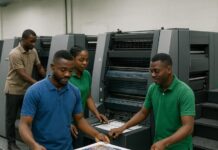
Come October 1st, 2022, Nigeria will mark her 62nd independence anniversary. It is indeed a time for celebrations and great feat as a country. 62 years of existence as an independent country is symbolic and for the Nigeria printing industry, it is a wake-up call for everyone to join hands with the Chartered Institute of Professional Printers of Nigeria (CIPPON), DCS Integrated Media Limited, Association of Printing Professionals of Nigeria (ASSPPON), Kaduna Master Printers (KAMPA) Abuja Master Printers, Society of Professional Printers of Nigeria (SPPN), concerned print stakeholders and every other association or bodies under the print value chain for the advocacy to ensure the business of printing becomes profitable again and Nigeria printing jobs remain in Nigeria.
Many years ago in the history of Nigeria’s printing industry, the sector was vibrant and one of the major sources of income for the government aside from oil and agriculture. It had a big impact on the economy as we had three paper mills -Nigeria National Paper Manufacturing Company Limited, Iwopin, Ogun State, for the production of Bond paper, Nigeria Paper Mills, Jebba, Kwara State to produce Kraft Paper, Nigeria Newsprint Manufacturing Company Limited, Olu – Iboku in Akwa-Ibom, State to produce Newsprint. The mills were established to bring down the cost of educational books, produce newsprint and Kraft paper and curb importation of papers, for local consumption which had neighbouring countries benefitting from it as they visited Nigeria (Shomolu – a printing hub in Lagos) to carry out their printing jobs.
The mills established between the 1960s to 1970s performed optimally except for The Nigerian Paper Mill, Jebba in the 1980’s as pulp and paper importation reduced drastically as a result of high capacity utilization in the mills. In 1985 and 1986, capacity utilization in Nigerian Paper Mill was 62.3% in the 1960’s and 66.17% in the 1960’s. In 1996, The Nigeria Newsprint Manufacturing Company Ltd. (NNMC), Olu Iboku also stopped production leading to complete dependence on importation of paper and paper products. In 2006, the mills were privatized, and, currently more than One Trillion Naira is expended on importation of paper products annually and over two million metric tonnes of paper worth are imported annually on raw paper and paper in the form of finished goods into Nigeria annually.
For instance, through the late 19th century and the early 20th century, Nigerian newspapers played a politically progressive role in public life. In the early 1930s, many Lagos-based publications were regularly publishing editorials calling for Nigerian independence and printing was an integral part of the struggle. Today, the fate of newspapers has become more uncertain with the rising costs of publication.
In the last three years, the circulation of newspapers in Nigeria has dropped by 70%, if issues affecting local capacity building is not strictly addressed, barely three newspapers will be able to survive the publication of their hard copies in the next five years.
Marcel Mbamalu of The Guardian Newspaper once told OBG that no newspaper in Nigeria has a daily circulation figure above 300,000, which competes poorly with key international markets. For example, in the UK five newspapers have a daily circulation above 1m copies, despite having a population one-third as large as Nigeria. In October 2016 two of the country’s leading papers, Leadership and The Punch, laid off more than 100 members of journalism staff, pointing to rising operating costs in the sector. One month later Emeka Ejide, publisher of the national newspaper Market Voices, called for the federal government to bail out Nigeria’s domestic print media.
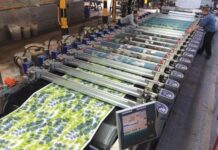
The above sad situation of Nigerian newspapers depicts how badly the printing industry is suffering. It will interest you to know that the Nigeria printing industry generates o 3multi trillion Naira in the entire value chain which includes: Paper and Paper converting, Commercial printing, Packaging printing, Security printing, Book production, Graphics communication, Textile Printing, Digital Printing, Flexography & Gravure Printing, Signage, Printing equipment and consumables dealership and Print Consultancy. Each is present in every local government in Nigeria and the second largest employer of labour aside from agriculture and the third highest contributor to the economy outside oil and Agriculture and yet rarely viewed as an integral sector of the economy.
Currently, the sector employs more than 10 million Nigerians in its entire value chain and the potentials are yet untapped to its optimum performance, thereby failing to contribute its quota to the growth of the economy.
Despite the huge potential of this industry and the constant appeal of the Chartered Institute of Professional Printers of Nigeria (CIPPON) established by Act 24 of 2007 – The body responsible for the regulation of the entire value chain of printing to the government, the sector has been slow to find recognition. As a consequence, we have continued to develop other countries’ capacities with our non-reform policies as it negatively affects the sector.
The discovery and exploration of oil fields in the early 1970s led to a booming economy. Oil quickly became the dominant sector of the economy, accounting for more than 90 percent of exports and providing the federal government with 80 percent of its revenue. Despite the flow of oil wealth in the past, foreign debts kept increasing; the economy has continued to suffer as a result of other key sectors of the economy such as the printing sector being neglected, coupled with stringent trade controls, increase in import duties on papers, machinery, and other print consumables while educational printed books overseas enjoy zero duties, rationing of foreign exchange with the rate being grossly overvalued and the list is endless. The above-mentioned distortions in the economy have reached an alarming proportion.
As a country, the industry is yet to recover fully from the 2016 recession that forced many printing companies to shut down resulting in the loss of thousands of jobs. We acknowledged the fact that Nigeria like other countries have been hard hit by the impact of the COVID-19 crisis
Despite these challenges, there is a need for the Nigerian printing industry to continue to pursue long-term local capacity building as a reform process for the industry to move forward. The first step to recovery will be to ensure that the sector retains existing printing jobs and to adequately achieve this, local capacity building is paramount for the long-term growth process. Nigeria is a big country and with government reform efforts, there are chances for growth and development going forward in the printing industry.
Slow recoveries in the larger economies will continue to constrain the pace of growth in the sector amid long-delayed reforms inclusion and implementation but we are optimistic that if the government will hear the advocacy call and ensure strict implementation and execution of order No. 5 of President Muhammed Buhari’s administration to give priority to the development of local content, Nigeria’s economy will bounce back with the huge potentials embedded in the printing industry value chain.