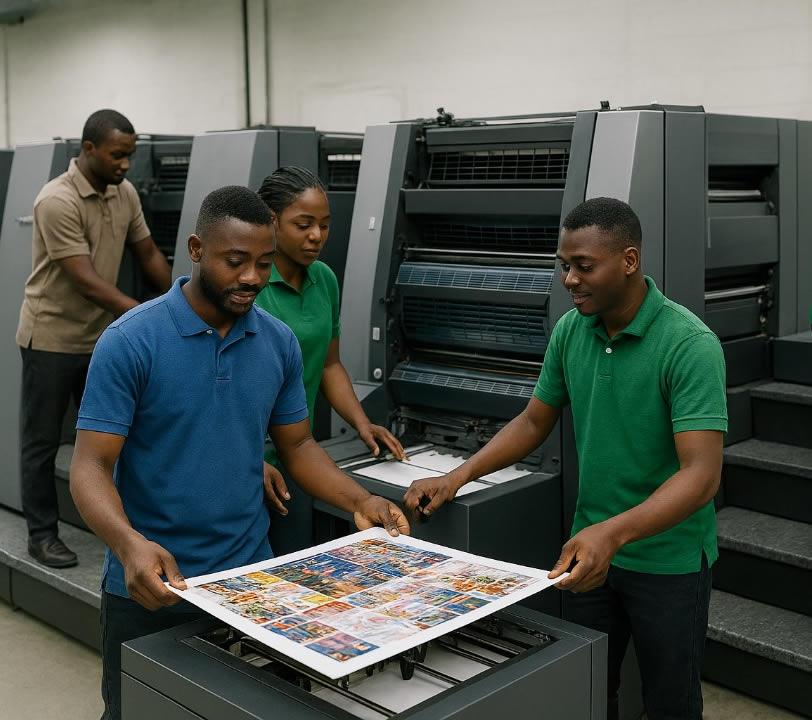


Walk into many printing presses across Nigeria today, from the bustling streets of Shomolu and Mushin in Lagos to the commercial centers of Aba, Kano, and Port Harcourt, and one reality becomes immediately apparent. The machines are still running, jobs are still being delivered, and businesses are still serving customers. Yet behind the noise of the presses and the smell of fresh ink lies a growing concern that many industry veterans are beginning to discuss more openly: Who will take over when today’s printers retire?
For decades, Nigeria’s printing industry has been powered by hardworking entrepreneurs, skilled machine operators, graphic artists, and production specialists who built their businesses through experience, resilience, and dedication. Many of these professionals entered the industry when printing was considered a respected trade and a reliable path to economic success.
Today, however, the industry faces a challenge that cannot be solved by purchasing a new machine, increasing production capacity, or securing a larger contract. It is the challenge of attracting, training, and retaining a new generation of talent.
The truth is that many young Nigerians know very little about the modern printing industry. When they think of career opportunities, they often imagine technology, digital marketing, software development, content creation, fintech, or artificial intelligence. Printing rarely appears on their list of desirable professions.
Yet this perception does not tell the full story.
Modern printing is no longer just about ink on paper. It is a sophisticated industry that combines technology, creativity, engineering, packaging, branding, design, logistics, automation, and entrepreneurship. From pharmaceutical packaging and security printing to digital printing, large-format branding, labels, flexible packaging, and commercial publishing, today’s printing industry is far more dynamic than many people realize.
The challenge is not that young people lack interest in innovation. The challenge is that the industry has not done enough to show them that printing itself has become innovative.
One of the biggest reasons younger generations overlook printing is visibility. While industries such as technology, entertainment, and digital media actively showcase their success stories online, many print businesses remain largely invisible to the very audience they hope to attract. Young people spend hours on social media platforms consuming content about careers, business opportunities, and emerging industries. Yet very few printing companies are telling their stories in ways that capture attention.
Imagine if more printing companies opened their doors to students, shared behind-the-scenes videos of production processes, showcased cutting-edge equipment, and highlighted the exciting projects they deliver for major brands. Imagine young Nigerians seeing how a simple concept becomes a product package on a supermarket shelf or a billboard that dominates a city skyline. Such exposure could completely transform perceptions about the industry.
Another major challenge is the shortage of structured training opportunities. Many experienced printers learned through apprenticeships and hands-on experience. While this approach has produced remarkable professionals, the next generation often seeks clearer career pathways. Young people want to know where they can start, how they can grow, what skills they need, and what opportunities await them in the future.
This is where industry stakeholders must step forward. Printing associations, educational institutions, equipment suppliers, and print business owners need to work together to create internship programmes, mentorship initiatives, technical training centers, and industry-academia partnerships. Students studying graphic design, engineering, marketing, business administration, and computer science should be exposed to the diverse opportunities available within the printing ecosystem.
The future printer may not only operate a machine. They may manage automated workflows, develop packaging solutions, analyze production data, operate digital printing systems, or lead sustainability initiatives. The industry needs talent with both technical and digital skills.
Equally important is the need to celebrate success. Across Nigeria, there are inspiring stories of young entrepreneurs building profitable printing businesses, creating jobs, and serving clients across multiple industries. These stories deserve more attention. When young people see peers succeeding in the sector, they begin to see possibilities for themselves.
The conversation about attracting young talent also requires an honest assessment of workplace culture. Today’s workforce values learning opportunities, career development, innovation, and purpose. Businesses that invest in their employees, embrace technology, and create environments where people can grow will naturally attract stronger talent.
Perhaps the greatest opportunity lies in changing the narrative around printing itself.
Printing is not a dying industry. Every product that reaches consumers needs packaging. Every election requires printed materials. Every business needs branding. Every educational institution relies on printed resources. Every growing economy requires communication, packaging, security documents, labels, and promotional materials.
The demand may evolve, but the need for print remains deeply woven into economic activity.
As Nigeria’s population continues to grow and industries expand, the printing sector will require fresh minds, new ideas, and a new generation of professionals capable of driving innovation and growth.
The question is no longer whether young Nigerians can contribute to the industry. They can.
The real question is whether the industry is prepared to inspire them to join.
The presses of tomorrow will not be powered solely by electricity, technology, or machinery. They will be powered by people. And the decisions made today about talent development will determine whether Nigeria’s printing industry thrives for another generation or struggles to replace the expertise that built it.
For an industry that has spent decades printing the future of businesses, brands, and institutions, perhaps the most important future to print now is its own.