

As Nigeria gradually approaches the 2027 general elections, the printing industry is once again looking towards a period that could bring significant business opportunities. From campaign posters, banners, flyers and branded souvenirs to ballot papers and other election-related materials, elections have traditionally created demand for printing services. However, beneath the excitement of a potential business boom lies a more complicated question: will the 2027 elections bring genuine prosperity to Nigerian printers, or will the familiar challenges of high production costs, delayed payments and intense competition turn the opportunity into another struggle for survival?
For many printing businesses, elections are among the few occasions when demand for printed materials can rise considerably within a relatively short period. Political parties, candidates, campaign organizations, and election-related institutions all require printed materials to communicate with voters, promote their activities, and support their operations. This presents a potentially lucrative market for printers, particularly those capable of handling large orders within tight deadlines.
However, the prospect of increased demand does not automatically translate into higher profits. In an industry already grappling with expensive paper, rising ink prices, unreliable electricity, and high transportation costs, the coming election season could present as many financial risks as it does business opportunities.
The Election Market: An Opportunity Too Big to Ignore
Every election cycle creates a chain of activities that extends beyond political campaigns. Posters, handbills, banners, stickers, branded T-shirts, vehicle wraps, billboards and other promotional materials all contribute to the demand for printing and related services. For Nigerian printers, this represents an opportunity to expand their customer base, secure bulk orders and generate additional revenue.
The 2027 elections could also create opportunities for businesses specializing in digital printing, large-format printing, screen printing, finishing, and promotional branding. Candidates and political organizations may require everything from small batches of personalized campaign materials to thousands of posters and other promotional items.
For commercial printers, the opportunity lies not only in securing large contracts but also in providing services that meet the different needs of political campaign organizations. A printer that can offer design, printing, finishing and timely delivery may attract clients looking for a single provider to handle several aspects of their campaign materials.
Yet, the size of an order does not necessarily determine its profitability. A printing company that secures a large contract without properly calculating its production costs may find itself working at a loss, particularly when material prices fluctuate between the time an order is placed and when it is completed.
Ballot Papers and Election Materials: A New Opportunity for Local Printers
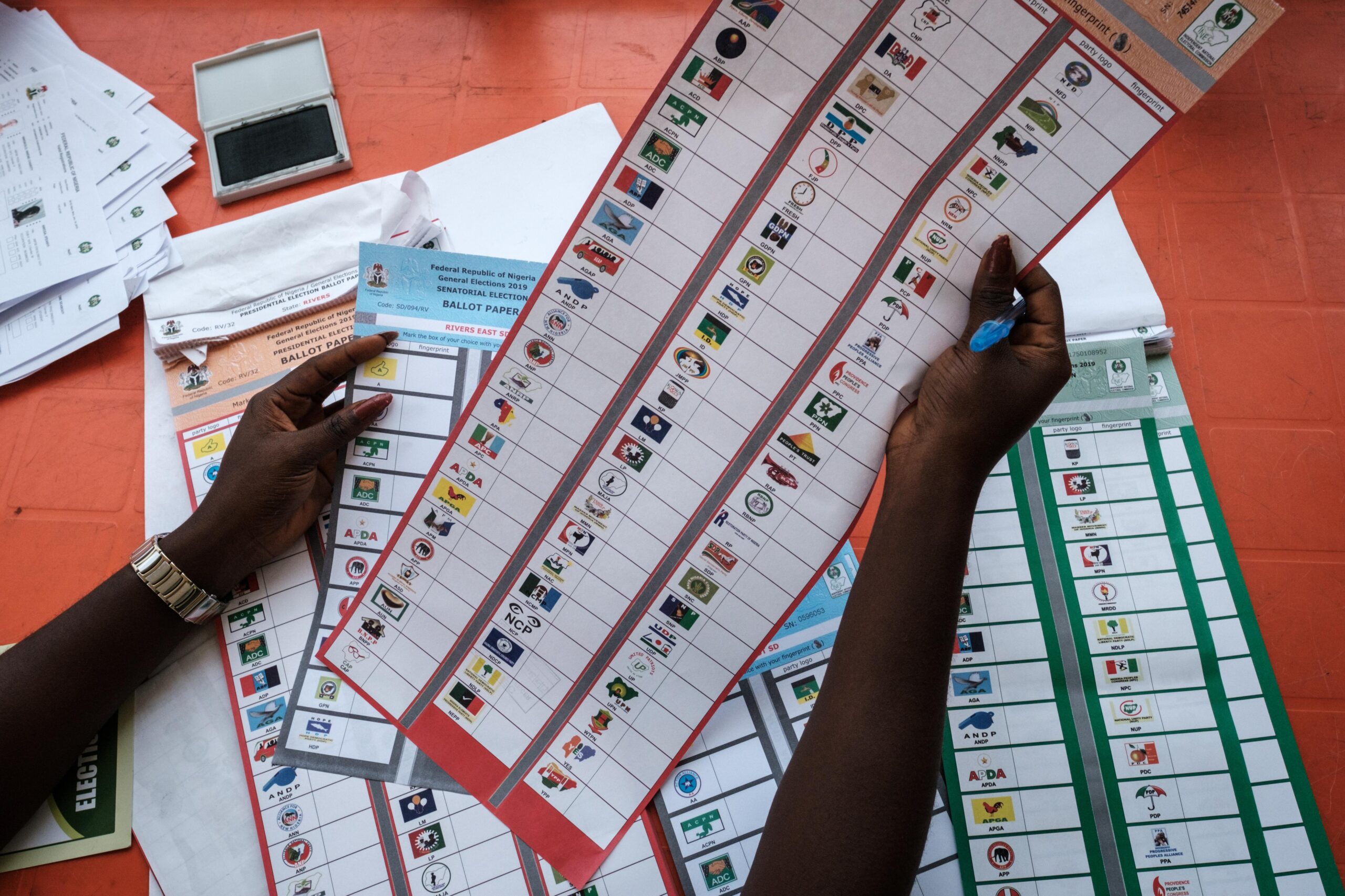
Beyond political campaign materials, the 2027 elections could open another important market for Nigerian printing companies: the production of sensitive election materials.
The Independent National Electoral Commission (INEC) has indicated that ballot papers and result sheets for the 2027 elections will be printed locally. In August 2026, the Commission disclosed that it had inspected local printing companies and was satisfied with the capacity and security arrangements of the companies being considered for the work.
This development brings the capabilities of Nigerian printing companies into sharper focus. Producing sensitive election materials requires more than high-speed printing equipment. It demands strict quality control, secure production facilities, reliable delivery systems, confidentiality and the ability to meet demanding deadlines.
For local printers, the prospect of participating in such contracts presents an opportunity to demonstrate their technical capabilities and strengthen confidence in the country’s printing infrastructure. However, access to these contracts will depend on procurement requirements, security standards, production capacity and the Commission’s selection processes. Not every printing business will necessarily qualify.
The potential benefits also extend beyond the companies awarded contracts. Suppliers of paper, printing consumables, finishing materials, logistics providers and other supporting businesses could experience increased demand as election-related production activities gather momentum.
The Rising Cost of Doing Business: The Other Side of the Opportunity
While the prospect of increased orders is attractive, Nigerian printers cannot afford to overlook the financial realities of operating in today’s business environment. The cost of paper, ink, plates, spare parts, and other essential production materials remains a major consideration for businesses, particularly those that depend on imported inputs.
Electricity is another significant concern. For printers operating in areas with unreliable public power supply, running generators for extended production hours can considerably increase operating expenses. During the election season, when clients may demand large quantities of materials within short periods, the cost of maintaining uninterrupted production could become even more burdensome.
There is also the challenge of fluctuating material prices. A printer who agrees to produce thousands of posters at a particular price may find that the cost of paper and ink has increased before the job is completed. Without proper costing and clearly defined payment terms, what initially appears to be a profitable contract could become a financial liability.
These challenges are particularly relevant to small and medium-sized printing businesses, which may lack the financial resources, production capacity and bargaining power of larger establishments. While bigger companies may be better positioned to handle bulk orders, smaller printers could find opportunities in short-run jobs, specialized campaign materials and partnerships with larger production houses.
Tight Deadlines, Quality and the Pressure to Deliver
Election printing is not simply about producing large quantities of materials. It is also about getting the job done within strict deadlines without compromising quality.
Campaign activities often operate on tight schedules, with candidates and political organizations requiring materials at short notice. For printers, this can mean longer production hours, additional shifts and increased pressure on both equipment and personnel.
Under such circumstances, poor planning can lead to production delays, wastage and costly mistakes. A machine breakdown at a critical stage of production, for instance, could disrupt an entire order, particularly for businesses with limited backup equipment.
Printers must therefore pay closer attention to preventive maintenance, inventory management, workforce planning and quality assurance. Keeping essential consumables in stock, servicing machines ahead of peak production periods and establishing reliable relationships with suppliers could help reduce avoidable disruptions.
Payment arrangements also deserve careful consideration. Some campaign-related jobs may involve substantial upfront expenditure, making it risky for printers to undertake large orders without adequate deposits or clearly agreed payment schedules. Businesses must balance the desire to secure contracts with the need to protect their cash flow.
Digital Printing and the Changing Nature of Election Campaigns
The 2027 elections may also highlight the growing importance of digital printing in Nigeria’s political campaign market. As campaigns increasingly seek customized materials for different audiences, the demand for flexible printing solutions could create opportunities for businesses equipped to handle short runs and personalized jobs.
Unlike traditional large-volume production, digital printing allows printers to produce smaller quantities without necessarily incurring the same setup costs associated with certain conventional processes. This can be useful for campaign materials that require frequent changes in names, photographs, messages and locations.
However, traditional printing methods will continue to have a role, particularly where large quantities and specific production requirements make them suitable. The choice of technology will depend on order volume, turnaround time, material requirements and overall production costs.
For Nigerian printers, the challenge is to identify where each technology offers practical value rather than investing in expensive machinery simply because it is new. Businesses that understand their customers’ needs and match them with appropriate production methods may be better positioned to manage costs and serve different segments of the election market.
Beyond the 2027 Elections: What Happens After the Campaigns?
Perhaps the most important question for Nigerian printers is what happens when the election season ends. Elections can create temporary increases in demand, but businesses still have to contend with rent, salaries, electricity, equipment maintenance and other operating expenses long after campaign materials have been delivered.
Relying heavily on election-related contracts could leave some printing businesses exposed to fluctuations in demand. A company that expands its workforce or takes on additional financial obligations in anticipation of election orders may struggle to sustain those expenses when the market returns to normal.
This makes business diversification particularly relevant. Printers can use the election period to establish relationships with new customers and explore opportunities in packaging, commercial printing, publishing, educational materials and corporate branding.
Developing these other revenue streams could help businesses reduce their dependence on seasonal orders and maintain more consistent production throughout the year. It could also encourage printers to invest in skills, equipment and services that remain useful beyond the election cycle.
A Defining Period for Nigerian Printers
With the presidential and National Assembly elections scheduled for January 16, 2027, and the governorship and State Houses of Assembly elections scheduled for February 6, 2027, according to INEC’s revised timetable, the countdown presents Nigerian printers with a limited window to prepare.
The coming months could provide opportunities for businesses across different segments of the printing value chain. However, the extent to which individual companies’ benefit will depend on their capacity, financial preparation, technical expertise and ability to manage the risks associated with election-related work.
For some printers, the elections may provide an opportunity to secure significant contracts and expand their operations. For others, rising costs, intense competition and cash-flow pressures may make the period particularly demanding.
Ultimately, the 2027 elections will be more than a test of how much Nigerian printers can produce. They will also bring into focus how well businesses can plan, manage costs, maintain quality and turn short-term demand into sustainable commercial opportunities.
The real question, therefore, is not simply how much work the elections will generate, but how much of that work Nigerian printers can convert into lasting business growth.