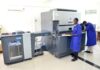


Across the globe, industry bodies are beginning to realize that the future of printing doesn’t just depend on machines, materials, or markets—it depends on people. One notable example is the PRINTING United Alliance in the United States, which has doubled down on efforts to strengthen the pipeline of skilled professionals entering the printing and graphic arts industry.
For Nigeria’s print sector, where conversations around skills gaps, outdated training systems, and limited access to modern knowledge are becoming more urgent, there are important lessons to draw.
Investing in Skills, Not Just Equipment
In many Nigerian print businesses today, investment is still heavily tilted toward equipment—new presses, finishing machines, and digital upgrades. While these are essential, the real competitive edge lies in the people operating them.
The Alliance’s approach is simple but powerful: make industry-relevant education widely accessible. Through its digital learning platform, I LEARNING+, it provides structured training across key areas such as print fundamentals, color management, and emerging technologies like artificial intelligence.
Imagine if similar structured, accessible learning platforms were widely adopted across Nigeria—whether through industry associations, private academies, or partnerships with institutions like Yaba College of Technology or Kaduna Polytechnic. The impact on productivity and quality could be transformative.
Removing Barriers to Entry
One of the standout features of this initiative is accessibility. Students and educators are offered free membership, with continued access even after graduation. This ensures that young professionals are not cut off from learning just as they enter the workforce.
In Nigeria, where many aspiring printers learn through informal apprenticeships or underfunded academic programmes, cost remains a major barrier. Access to affordable—or even free—industry-standard training could significantly improve the quality of entry-level talent.
Training That Matches Industry Reality
The courses offered are not just theoretical. They are designed around real-world production environments—covering everything from basic print knowledge (similar to a “Print 101”) to specialized areas like job estimation, workflow management, and color accuracy.
This is particularly relevant in Nigeria, where many graduates of printing technology or graphic arts programmes often struggle to adapt to modern press environments due to outdated curricula.
Bridging this gap requires closer collaboration between:
- Print companies
- Educational institutions
- Industry associations
When training reflects actual shop-floor realities, businesses spend less time retraining and more time producing.
The Numbers Tell the Story
Globally, the Alliance has already engaged thousands of students and educators across dozens of institutions, with participation growing year after year. More importantly, learners are not just signing up—they are completing multiple courses and gaining certifications that improve their employability.
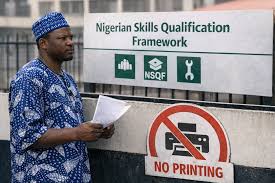
For Nigeria, this highlights a key opportunity: structured certification in printing skills. Today, many Nigerian print professionals rely solely on experience, with little formal recognition of their expertise. Introducing widely recognized certifications could:
- Improve job mobility
- Standardize skill levels
- Boost confidence among employers
Why Workforce Development Matters Now
As rightly pointed out by Ford Bowers, workforce development is not a side project—it is a strategic necessity.
This rings especially true in Nigeria, where the industry is facing multiple pressures:
- Rising cost of diesel and power
- Currency fluctuations affecting imported materials
- Increasing competition from digital media
To survive and grow, print businesses need smarter, more efficient operations—and that starts with well-trained people.
A Model Worth Adapting Locally
The broader idea is not to replicate foreign systems exactly, but to adapt the principles:
- Accessible learning platforms
- Industry-backed certifications
- Stronger school-to-industry connections
- Continuous professional development
Organizations like the Chartered Institute of Professional Printers of Nigeria (CIPPON) and other stakeholders have a critical role to play here. By championing structured training and digital learning, they can help reposition the industry for long-term sustainability.
Preparing for the Future
The print industry is evolving—automation, AI, and digital workflows are no longer distant concepts; they are already reshaping production globally.
For Nigeria, the question is not whether these changes will come, but whether the workforce will be ready.
By investing in education, removing barriers to learning, and aligning training with real industry needs, the sector can begin to build a new generation of professionals—skilled, adaptable, and ready to lead.
Because in the end, the future of printing in Nigeria will not be defined by machines alone, but by the people who run them.