

The Industry’s Biggest Challenge May Not Be Technology; It’s People;
Nigeria’s printing industry has weathered countless storms. It has survived economic recessions, currency volatility, rising production costs, erratic power supply, the digital revolution, and an increasingly competitive marketplace. Through it all, printers have continued to innovate, invest, and deliver.
Yet a quieter crisis is unfolding, one that threatens the industry’s future more profoundly than any economic downturn.
The print sector is running out of people.
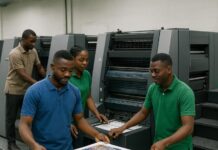
Walk into many commercial print houses, packaging plants or prepress facilities today, and a familiar pattern emerges. Some of the industry’s most experienced press operators, color specialists, machine technicians and production managers are approaching retirement. Many have spent three or four decades mastering skills that cannot be learned overnight.
Now ask a different question: Who is ready to replace them?
For too many businesses, the answer is uncertain.
Across Nigeria, employers are finding it increasingly difficult to recruit skilled machine operators, prepress technicians, finishing specialists, color management experts and print sales professionals. At the same time, fewer young people see printing as a career worth pursuing.
The result is a widening talent gap that could become one of the greatest threats to the industry’s long-term competitiveness.
Printing Has Changed—But Perceptions Have Not
For many young Nigerians, the word printing still evokes images of noisy offset presses, ink-stained overalls and physically demanding factory work.
That perception is decades out of date.
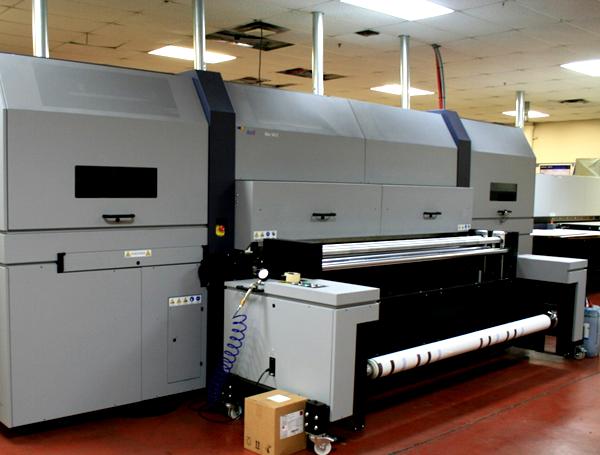
Modern printing is driven by automation, software, robotics, digital color management, artificial intelligence, data analytics, workflow integration and sophisticated packaging technologies. Today’s production floor increasingly resembles a high-tech manufacturing environment rather than the print shops of the past.
From digitally connected presses and automated finishing equipment to smart packaging, variable data printing and cloud-based production management, the industry now offers careers that blend engineering, information technology, design, chemistry, marketing and business management.
Yet many students, and even many career advisers, remain unaware of these opportunities.
When young people do not understand the future of an industry, they rarely choose to build their future within it.
The Skills Gap Is Already Affecting Business Performance
The consequences of the talent shortage are becoming increasingly visible.
Print companies report spending months searching for experienced operators.
Machine downtime increases because qualified maintenance personnel are scarce.
Production errors become more common when inexperienced staff is rushed into critical roles.
Businesses delay expansion because they cannot assemble competent technical teams.
Some companies even decline lucrative contracts simply because they lack the human capacity to deliver them on schedule.
In an era where customers expect shorter turnaround times, consistent quality and faster innovation, the shortage of skilled professionals directly affects profitability.
Technology alone cannot solve this problem.
A world-class press cannot compensate for a shortage of world-class people.
An Industry Losing Its Institutional Knowledge
One of the most overlooked risks facing Nigerian printing is the gradual loss of institutional knowledge.
Many experienced professionals possess practical expertise that has never been formally documented.
They understand how to diagnose subtle press issues by sound alone.
They know how different paper stocks behave under varying humidity conditions.
They recognize color inconsistencies long before automated systems detect them.
They have developed troubleshooting techniques through years of experience.
If these professionals retire without mentoring successors, decades of accumulated knowledge could disappear with them.
Replacing equipment is expensive.
Replacing experience is far more difficult.
Education and Industry Must Work Together
Closing the skills gap cannot be left to employers alone.
Educational institutions, vocational centers, professional associations, equipment suppliers and government agencies all have important roles to play.
Nigeria needs stronger partnerships between academia and industry.
Students studying graphic design, industrial chemistry, mechanical engineering, computer science, packaging technology and manufacturing should be exposed to modern printing environments long before graduation.
Industrial attachments should become more meaningful.
Curricula should reflect emerging technologies rather than outdated production methods.
Equipment manufacturers can contribute by establishing demonstration centers and certification programmes to familiarize students with contemporary production systems.
Professional bodies can organize mentorship initiatives that connect experienced practitioners with young professionals entering the industry.
The classroom and the factory floor must no longer operate as separate worlds.
The Apprenticeship Model Deserves a Modern Revival
For decades, apprenticeship was one of the strongest foundations of Nigeria’s printing industry.
Young trainees learned directly from experienced craftsmen, gradually building technical confidence through practical experience.
While that tradition still exists in parts of the industry, today’s apprenticeship programmes must evolve.
The modern apprentice should learn far more than machine operation.
Training should include:
- Digital workflows and automation.
- Color science and quality control.
- Preventive equipment maintenance.
- Packaging technologies.
- Customer relationship management.
- Data-driven production planning.
- Sustainability and waste reduction.
- Workplace safety and international quality standards.
A digitally skilled apprentice becomes more valuable to employers, and more adaptable as technology evolves.
The Industry Must Tell a Better Story
Another challenge is visibility.
Ask university students to name careers in banking, medicine, software engineering or telecommunications, and most can answer confidently.
Ask them about opportunities in printing, and many struggle to respond.
This is not because opportunities do not exist.
It is because the industry rarely tells its story.
Printing touches virtually every sector of the economy: education, pharmaceuticals, food and beverage, manufacturing, logistics, publishing, advertising, elections, security printing, financial services, and consumer packaging.
Without printing, brands cannot communicate.
Products cannot be packaged effectively.
Books cannot educate.
Labels cannot inform.
Campaigns cannot persuade.
The industry must actively showcase its relevance through career fairs, school outreach programs, social media engagement, innovation competitions and industry open days.
Young people cannot aspire to careers they never see.
Technology Should Attract, Not Replace, Young Talent
Automation often raises fears about job losses.
In reality, it is changing the nature of work rather than eliminating it.
Modern printing requires software specialists, workflow managers, automation engineers, color analysts, cybersecurity professionals, digital marketers, packaging consultants and customer experience experts alongside traditional press operators.
The industry’s workforce is becoming more multidisciplinary.
This evolution presents an opportunity to attract a generation that is already comfortable with digital technology.
The future print professional may spend as much time analyzing production dashboards and managing cloud-based workflows as operating printing equipment.
That is a career story worth telling.
Leadership Must Invest Beyond Equipment
Many companies readily invest millions of naira in new machinery.
Far fewer allocate comparable resources to developing people.
Yet every successful technology investment ultimately depends on the competence of those operating it.
Forward-thinking print businesses are increasingly recognizing that workforce development is not an expense; it is a strategic investment.
Continuous learning, professional certifications, technical workshops, leadership development and succession planning should become standard business practices rather than occasional activities.
The strongest companies of tomorrow will not necessarily own the newest equipment.
They will employ the most capable people.
A National Opportunity
Nigeria has one of Africa’s youngest populations.
Every year, thousands of graduates enter the labor market seeking meaningful careers.
The printing industry should view this demographic advantage as an opportunity rather than a challenge.
With coordinated investment in technical education, mentorship, internships, entrepreneurship and digital skills development, the sector can build a new generation of professionals equipped to compete not only within Nigeria but across Africa.
The demand for packaging, commercial printing, publishing, labels and industrial printing continues to grow.
The question is not whether opportunities will exist.
The question is whether Nigeria will have enough skilled professionals ready to seize them.
The Time to Act Is Now
Every industry reaches defining moments.
For Nigerian printing, this is one of them.
The presses of tomorrow will undoubtedly become faster, smarter, and more connected.
Artificial intelligence will optimize workflows.
Automation will reduce repetitive tasks.
Digital technologies will continue reshaping production.
But none of these innovations can replace vision, creativity, technical judgment and human expertise.
The future of Nigeria’s print industry will ultimately depend not on the machines it buys, but on the people, it inspires, trains and empowers.
If the industry invests in talent today, it will secure decades of innovation, productivity and global competitiveness.
If it is delayed, the cost may not simply be due to a shortage of skilled workers.
It may be the gradual erosion of an industry that has long been central to Nigeria’s manufacturing, education, packaging and communications ecosystem.
The next generation of print professionals is out there.
The real challenge is whether the industry will reach them before another career does.
Printers Digest Insight
The conversation about the future of printing often centers on technology, automation, and investment. Yet the industry’s most valuable asset remains its people. Machines can be imported. Software can be upgraded. But skilled professionals must be nurtured over time. Nigeria’s print ecosystem has an opportunity to transform today’s talent crisis into tomorrow’s competitive advantage by building stronger bridges between education, industry and innovation. The future of print will be written not only by smarter presses, but by smarter people.